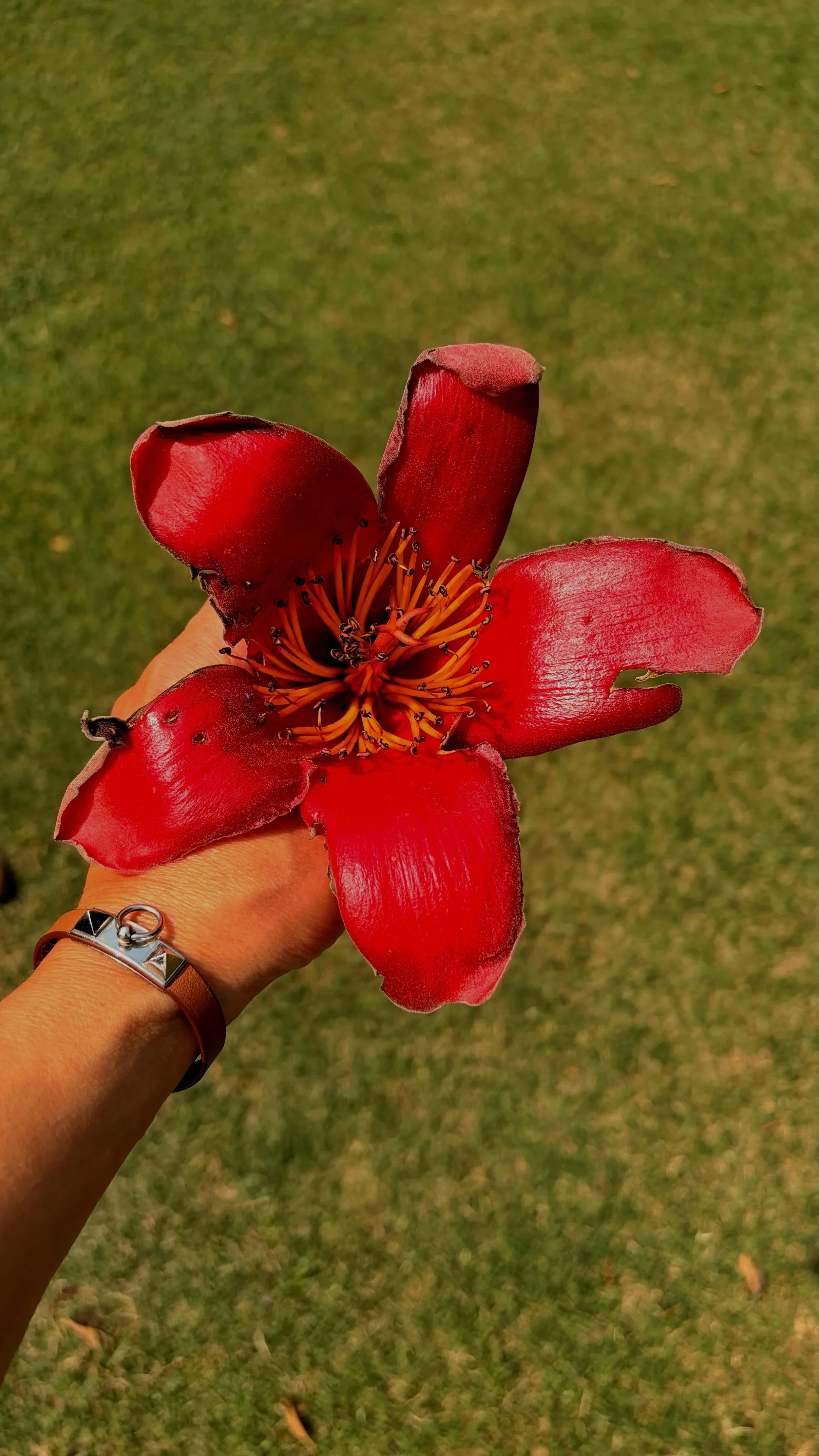
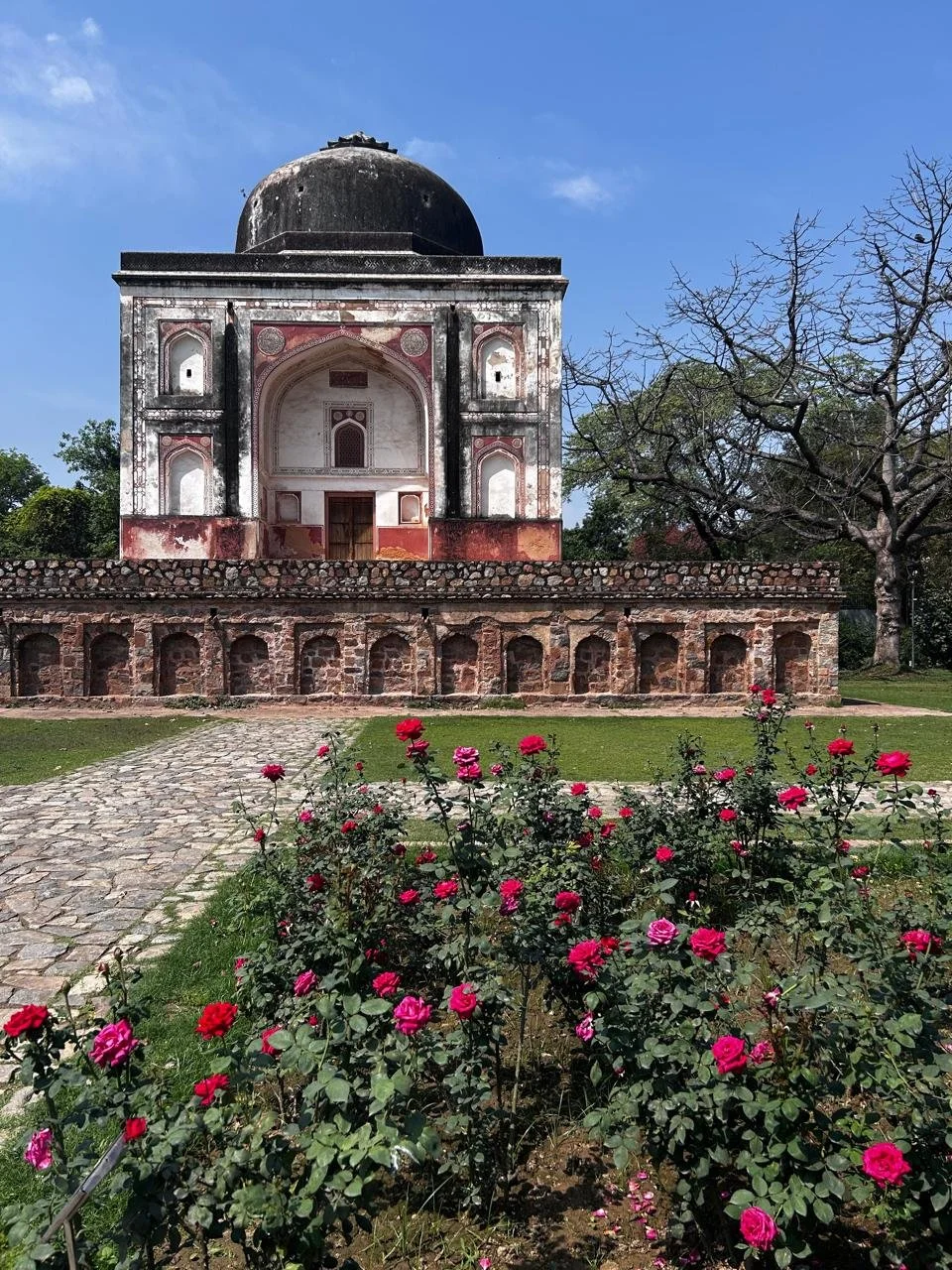
Spring has arrived in Delhi, and the sun climbs high, already warm enough to make the city shimmer at 34 degrees. In streets and gardens, people wander with faces turned skyward, drawn to the light. This is the brief moment in the year when the semal and palash trees take over the skyline. The semal, or silk cotton tree (Bombax ceiba), rises tall above avenues and gardens, its branches bare of leaves yet covered in large crimson blossoms that appear almost overnight. Nearby the palash often called the flame of the forest (Butea monosperma), carries clusters of curved flowers in vivid shades of red and orange. For a few weeks these trees transform the city, their crowns glowing against the pale spring sky while fallen petals gather along sidewalks and garden paths.
The nectar-rich flowers attract a steady flow of birds. Sunbirds hover among the blossoms, bulbuls and mynas move noisily through the branches, and bright green parakeets often arrive to feed. The trees become small ecosystems of movement and sound, flashes of wings crossing between the red blooms. Soon the amaltas will follow, letting cascades of golden flowers fall across pavements and parked cars, scattering early hints of summer across the city.
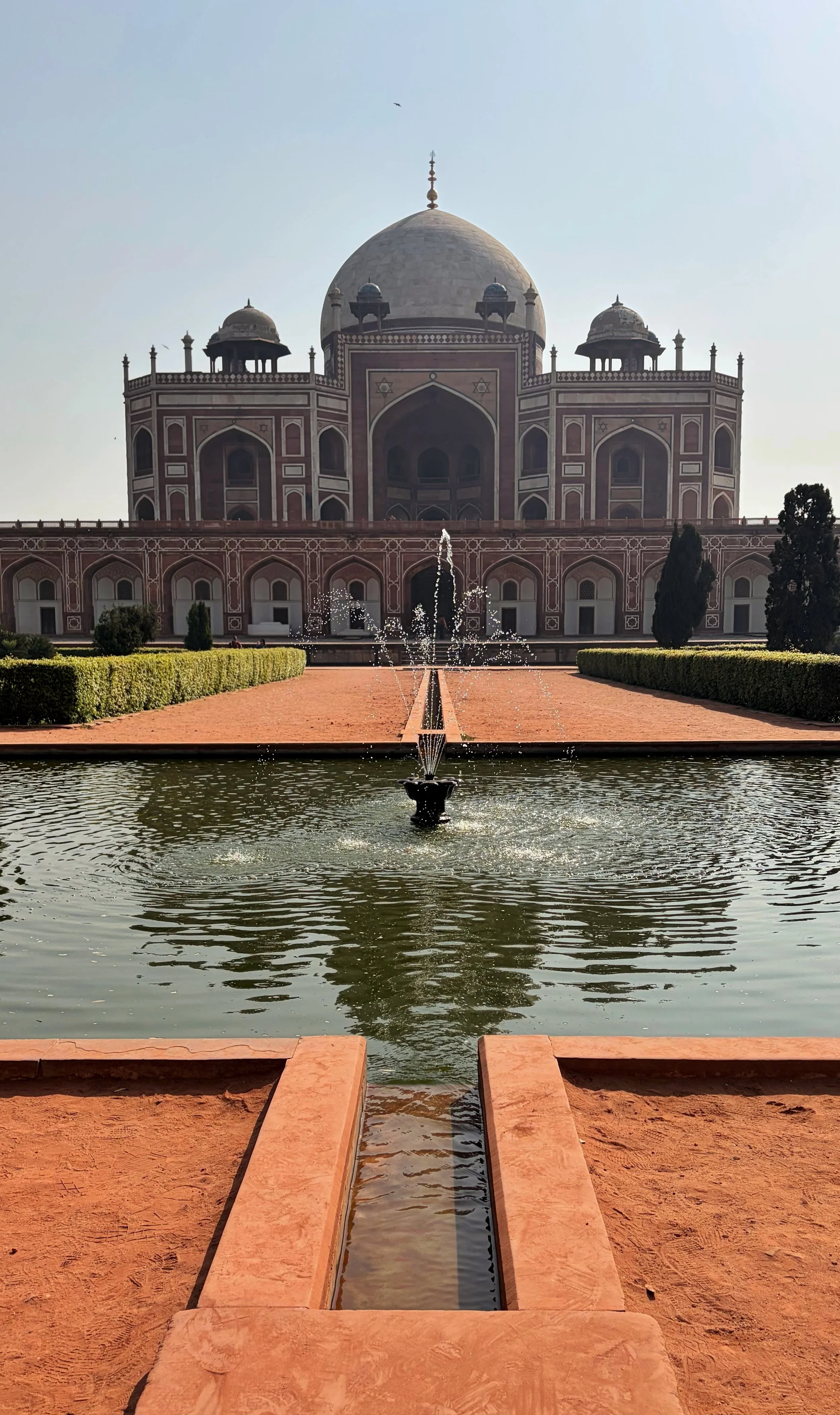
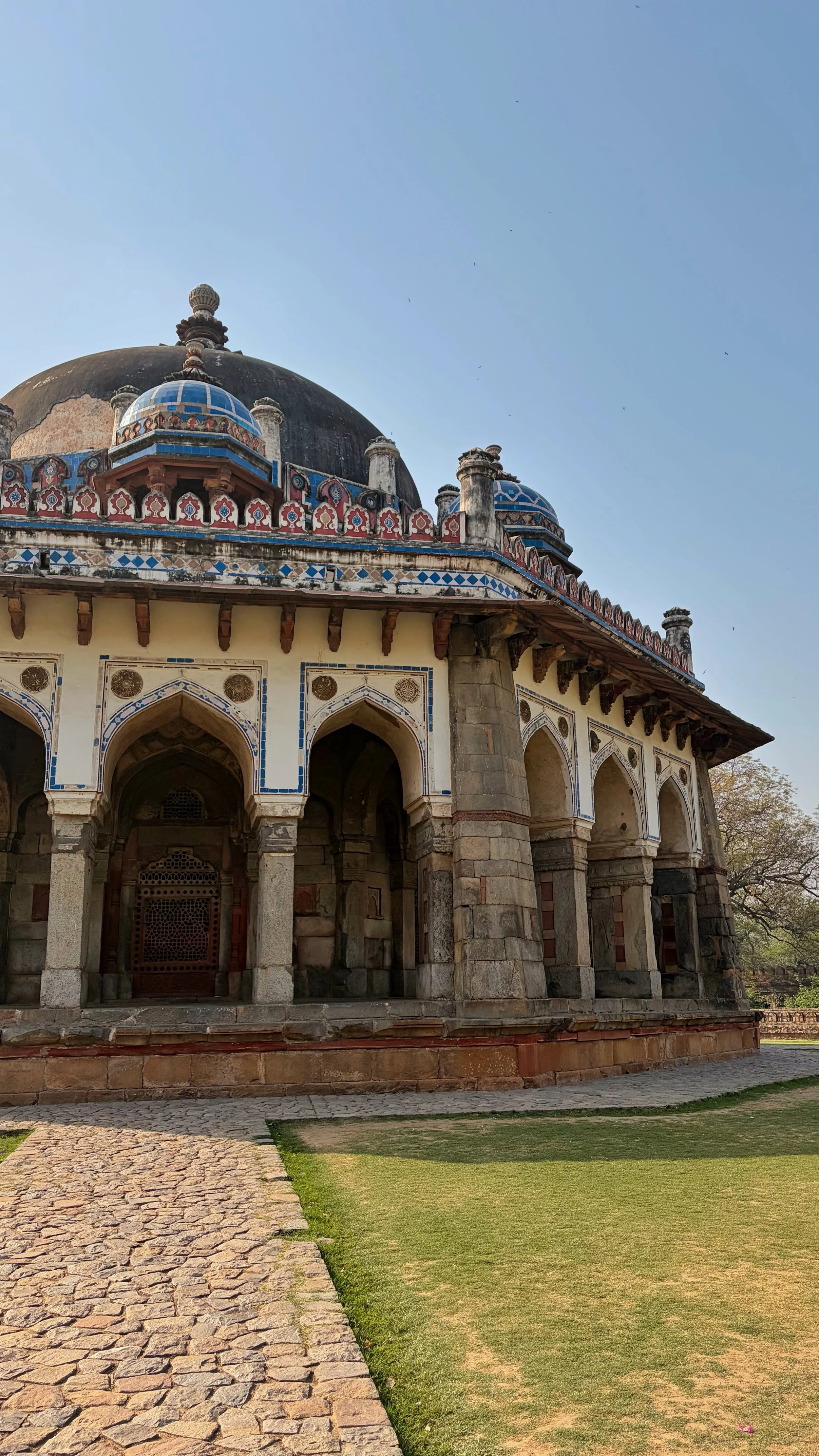
It is in this seasonal glow that I step onto the grounds of Humayun’s Tomb. The gardens feel alive, yet carefully composed, offering a contrast to the exuberance of the city beyond their walls. The same sense of atmosphere I felt when I first saw the Taj Mahal greets me here: A balance of scale, light, and space that makes the architecture seem at once monumental and intimate. The tomb itself, built in 1572, rises from the center of a formal Mughal garden in Nizamuddin, a UNESCO World Heritage Site, while the surrounding complex includes smaller mausoleums, mosques, pavilions, stepwells, and garden structures, forming one of the largest ensembles of medieval Islamic architecture in India.
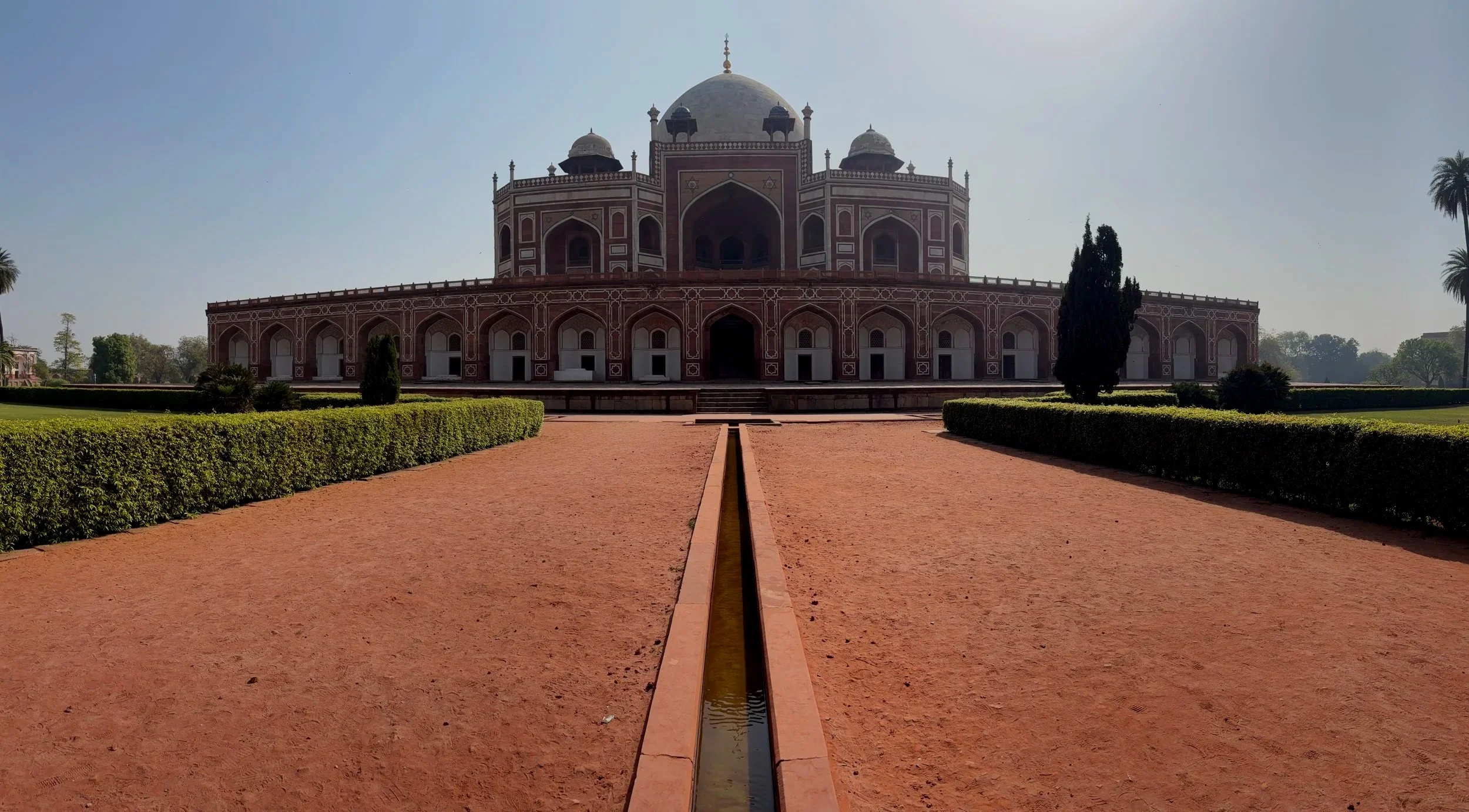
Humayun’s Tomb, New Delhi, UNESCO World Heritage Site
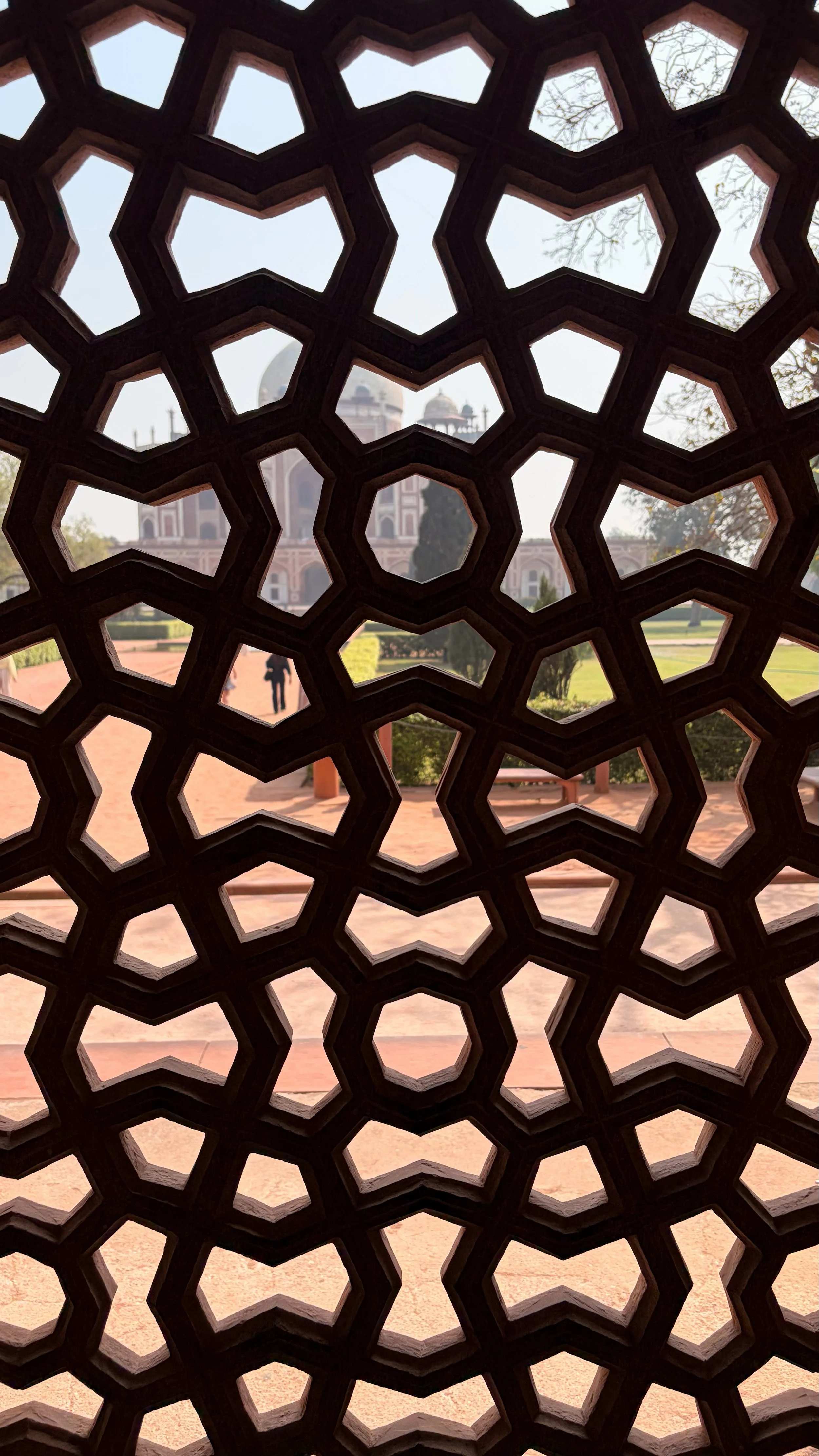
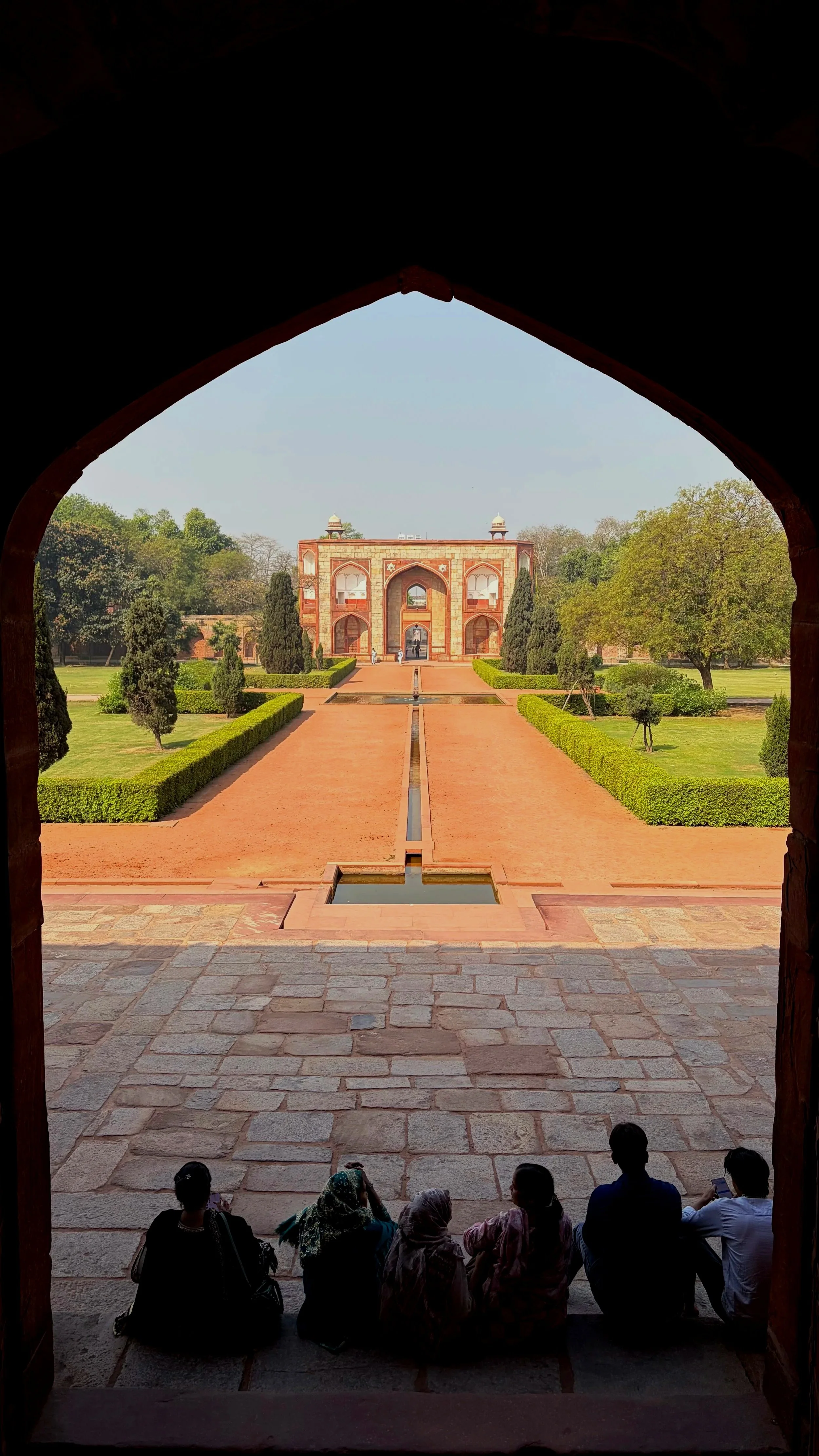
Often regarded as a precursor to the Taj Mahal, Humayun’s Tomb set architectural principles that would later reach their most famous expression in Agra: a domed mausoleum within a charbagh garden, elevated on a grand plinth, organized along precise axes of water, pathways, and greenery. The tomb is striking: a high central dome atop a square plinth, framed by symmetrical arched facades, carved niches, and delicate jali screens that filter light and air. Red sandstone meets pale marble in visual harmony, while gateways, terraces, and pillared pavilions reflect a seamless blend of Persian and Indian influences.
Over centuries, rulers and nobles chose to be buried here, creating a dense constellation of tombs amid the water channels, pathways, and trees. Walking through the gardens, linear water channels mirror the sky and domes; avenues lined with cypress and fruit trees offer moments of reflection; flowering plants scent the air, adding depth to the experience. And then, cutting through this composed stillness, there are bursts of life: masses of schoolchildren flooding the paths, happily chatting, nudging and pushing one another forward, their voices echoing between stone and water. Some pause, turning with bright curiosity, waving cheerfully as they pass—an unselfconscious energy that briefly reshapes the atmosphere. The interplay of light, geometry, natural elements, and these fleeting human moments ensures that every turn reveals something new—a distant pavilion, a dome reflected in a pool, or the intricate details of a nearby tomb.
Humayun’s Tomb is more than a single monument. It is part of a broader historic cultural landscape where architecture, gardens, and memory intertwine, offering continuity, contemplation, and discovery at every step. The site rewards time and attention, whether you live in Delhi or are simply visiting the city.
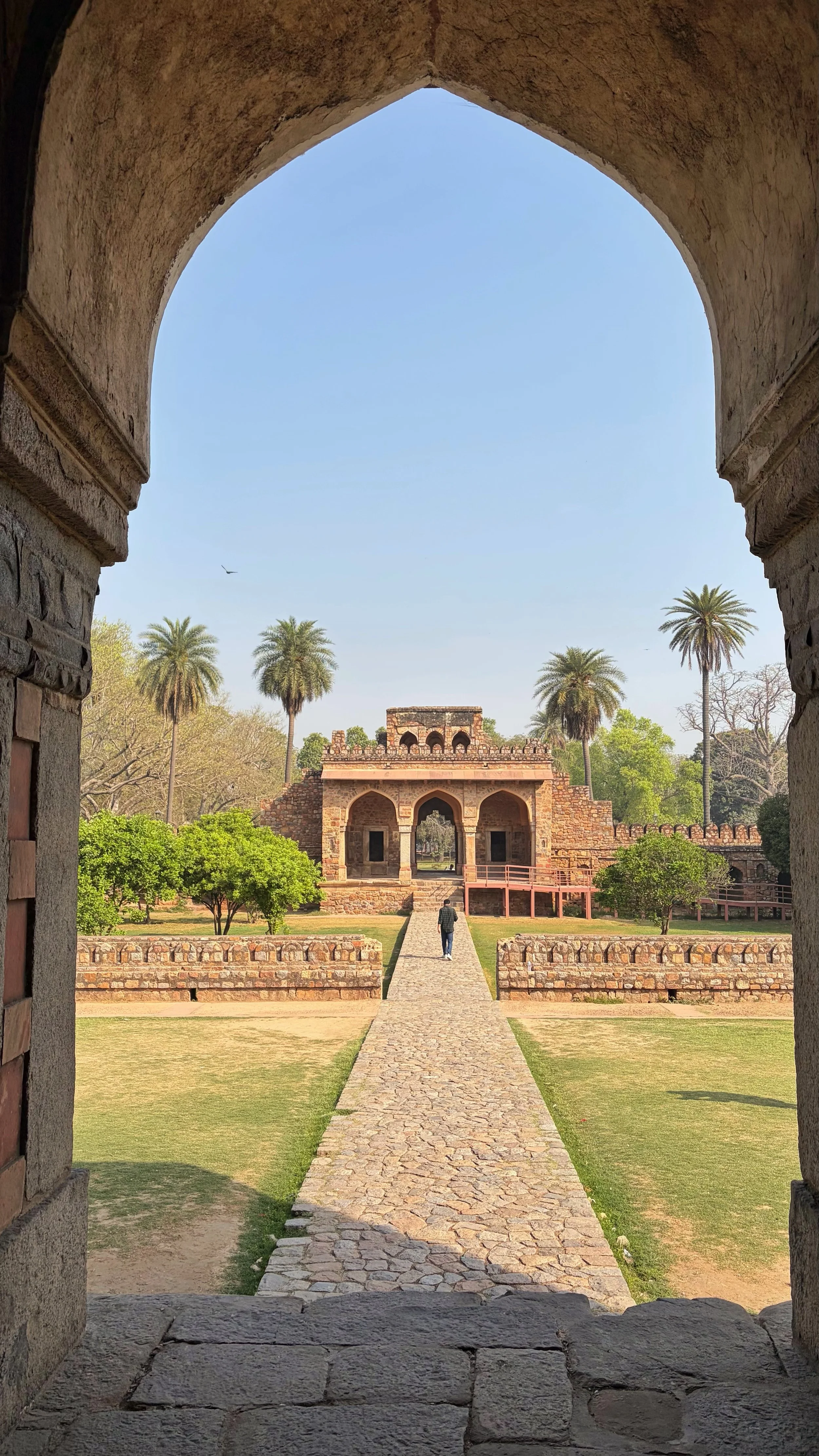
Just beyond the tomb’s boundaries, the historic landscape extends into Sunder Nursery, a large restored garden park with 4,500 trees. Moving through the nursery, the formal symmetry of Humayun’s Tomb gives way to a more organic rhythm. A central spine draws the eye along paths and water features, but venturing off-axis, plantings become informal, groves and lawns unfolding in unexpected ways. Hundreds of tree species and varied plantings give the space the feel of both garden and arboretum. Birds and butterflies move freely through the grounds, and the scale—from tall native trees to ornamental beds—creates a layered, immersive experience.
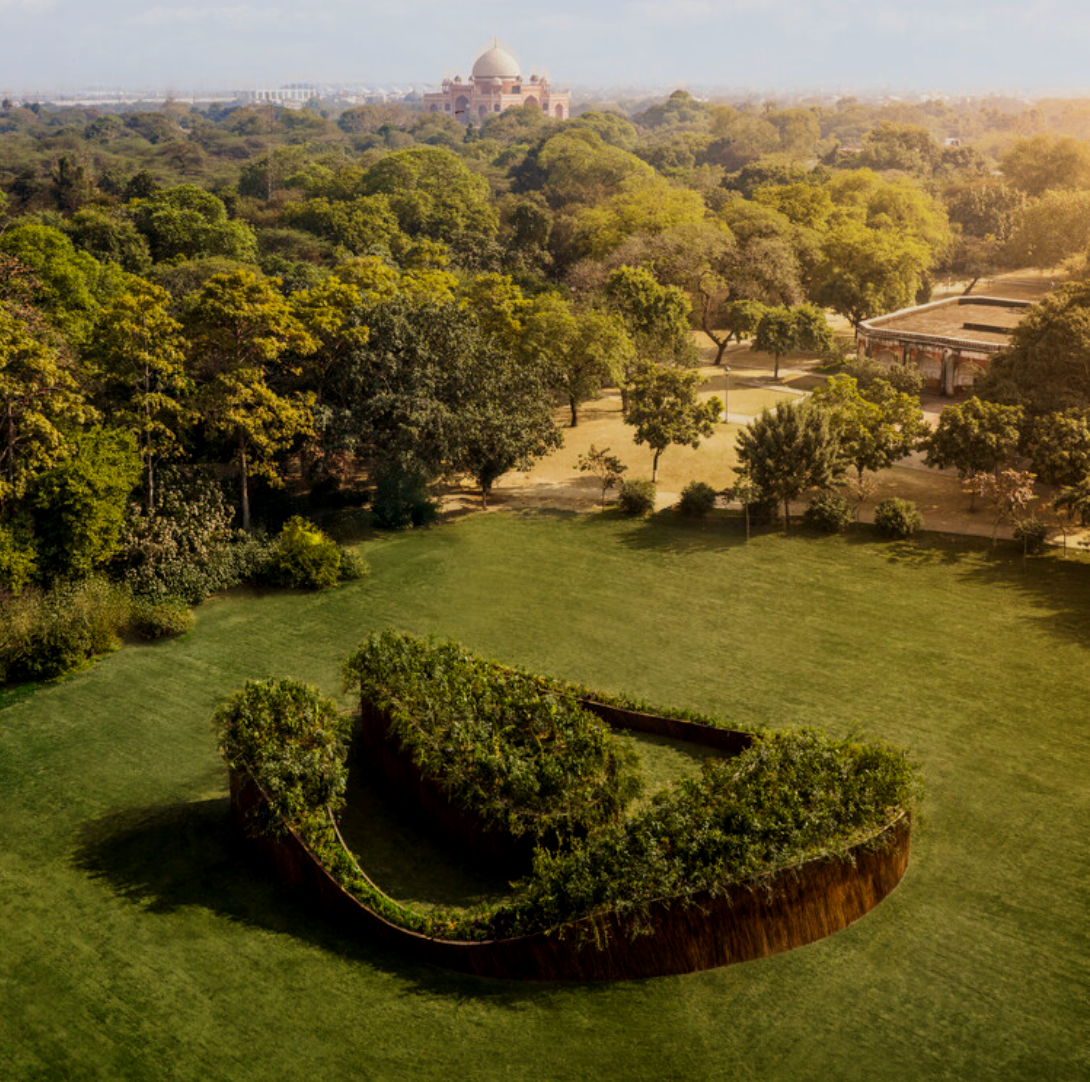
The Aranyani Pavilion, Photo Credit: Lokesh Dang , Architects: t __ m space, Designer: Tara Lal, 2026
Beyond the grounds of Humayun's Tomb, the historic landscape continues into Sunder Nursery, a large garden park that has gradually become one of Delhi’s most interesting public green spaces. The site carries layers of history. Parts of the landscape date back to the Mughal period, while during the development of modern New Delhi the area functioned as a nursery where trees and plants were cultivated for avenues and gardens across the capital.
Today the park unfolds across a wide expanse of lawns, pathways, water features and shaded groves. Scattered throughout the grounds are several restored Mughal-era monuments, including elegant garden pavilions and domed structures such as the Sunderwala Burj and Sunderwala Mahal. These historic buildings sit comfortably within the planting, creating a setting where architecture and landscape feel closely interwoven.
Walking through Sunder Nursery feels different from the formal geometry of the tomb garden. While some areas echo the axial layout associated with Mughal design, much of the park opens into looser groves of trees and open lawns where visitors linger, walk or simply sit beneath the canopy. The planting is extensive, with hundreds of species of trees, shrubs and flowering plants that change the character of the landscape through the seasons. The diversity of vegetation has also turned the park into a lively habitat for birds and butterflies, adding movement and sound to the garden throughout the day.
On Sundays the atmosphere becomes more animated when a farmers’ and artisan market sets up within the park. Stalls appear along the pathways offering seasonal produce, homemade foods, honey, breads and a range of handcrafted goods. The market draws a steady stream of visitors and adds an informal social rhythm to the historic landscape.
In recent seasons, this engagement with the garden has extended into contemporary installations as well. The Aranyani Pavilion, a temporary structure built from bamboo, reclaimed lantana and native plants, invited visitors to move through its spiral form while light filtered through the woven materials and foliage above. Inspired by the idea of sacred groves, the installation blended architecture and vegetation in a way that felt naturally rooted in the garden itself.
Taken together, these layers—historic monuments, extensive planting, public gatherings and occasional artistic interventions—mean that Sunder Nursery functions as far more than a backdrop to the nearby tomb. It has evolved into a landscape where ecology, design and everyday life intersect, offering visitors multiple ways to experience this part of Delhi beyond the monumental architecture alone.