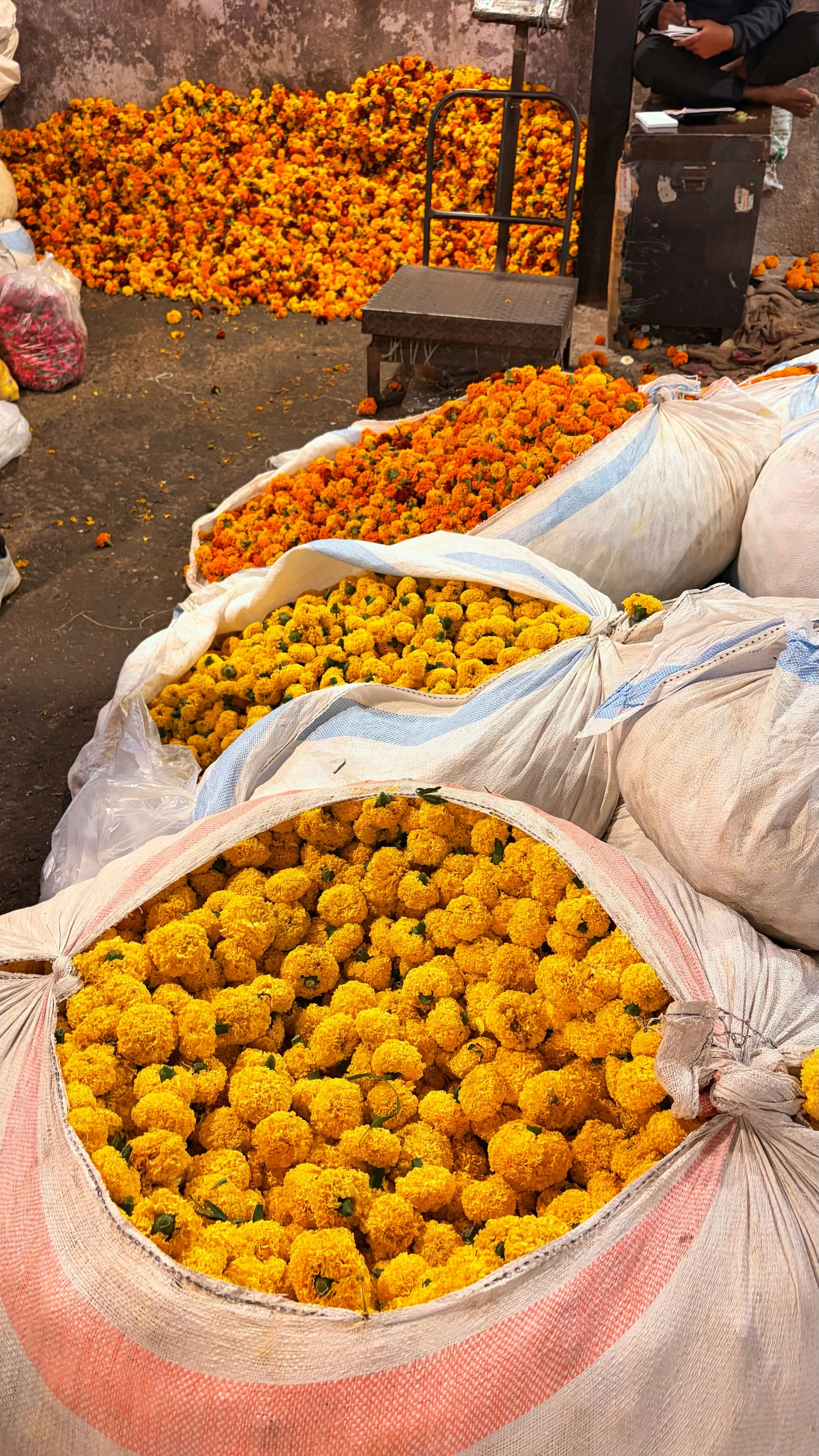
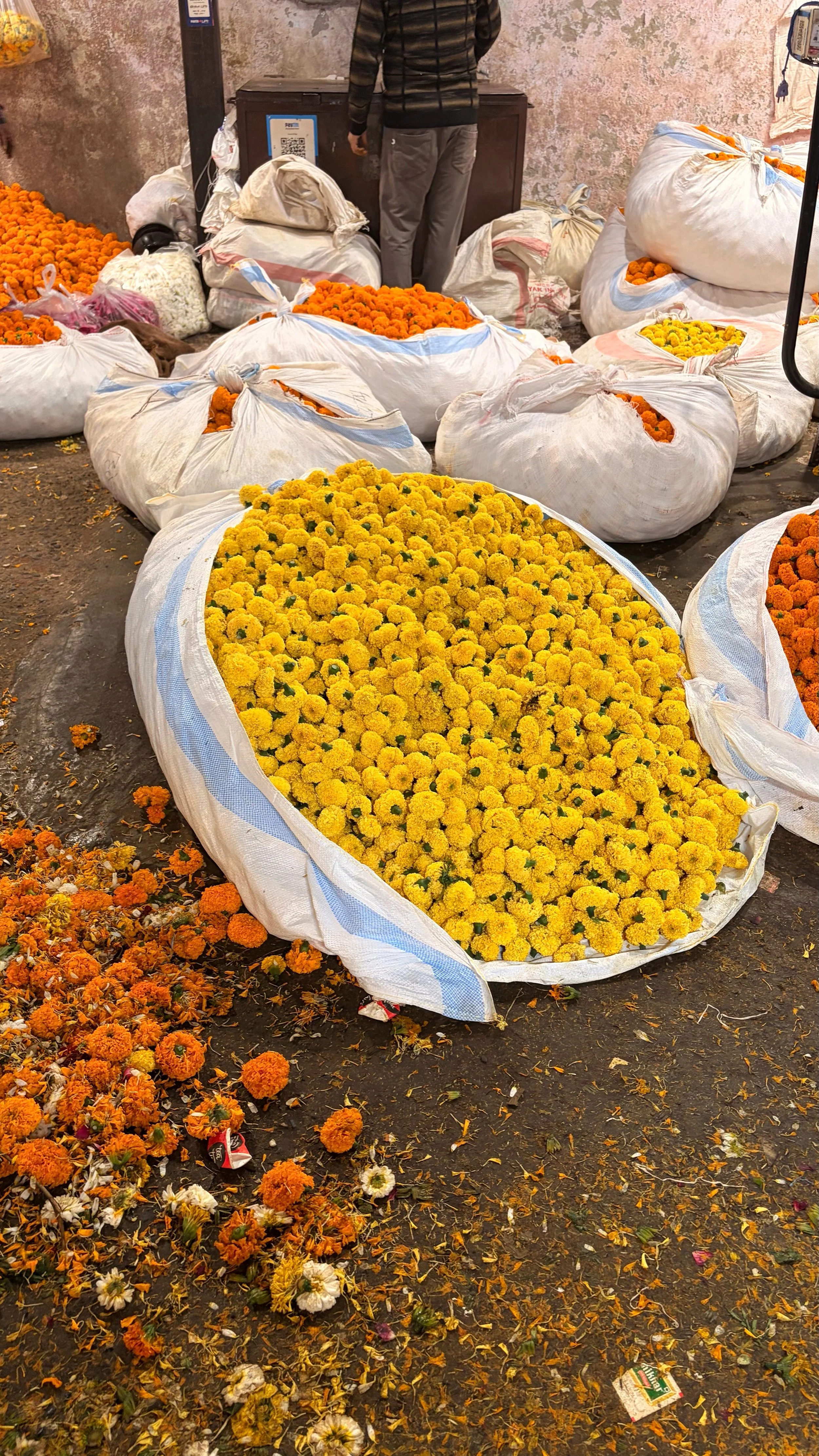
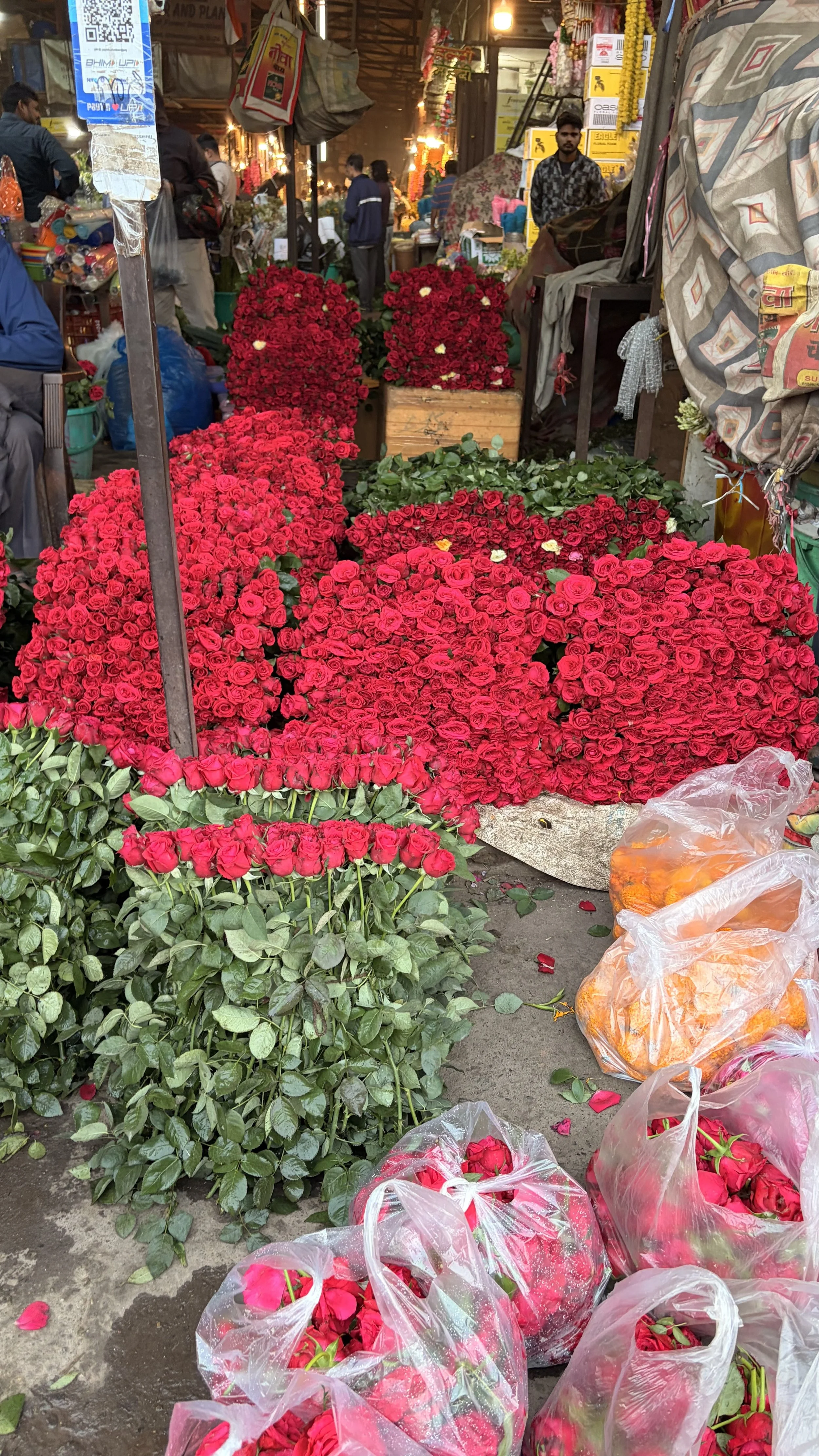
At five in the morning, Central Delhi lingers in a subdued in-between—streetlights fading, the air still holding a trace of coolness before the day begins to press in. By the time I reach Chhatarpur, just after dawn, that stillness has already given way to movement. The Chattarpur Flower Market does not present itself as a single scene but as a sequence of shifting impressions. It runs in a kind of survival mode—everything unfolding at once, accelerating by the minute. The pulse rises steadily. Voices cut through the air, vendors calling out prices, negotiations happening loudly and fast, conversations overlapping in tight proximity.
Movement is constant and not always easy. The ground shifts underfoot—mud, puddles, crushed petals and wilted flowers forming a soft, uneven layer. You find yourself navigating around motorbikes, squeezing past tuk-tuks, at times stepping over low structures or edging along narrow passages. Piles of swept leaves gather in corners, only to be scattered again by the flow of people.
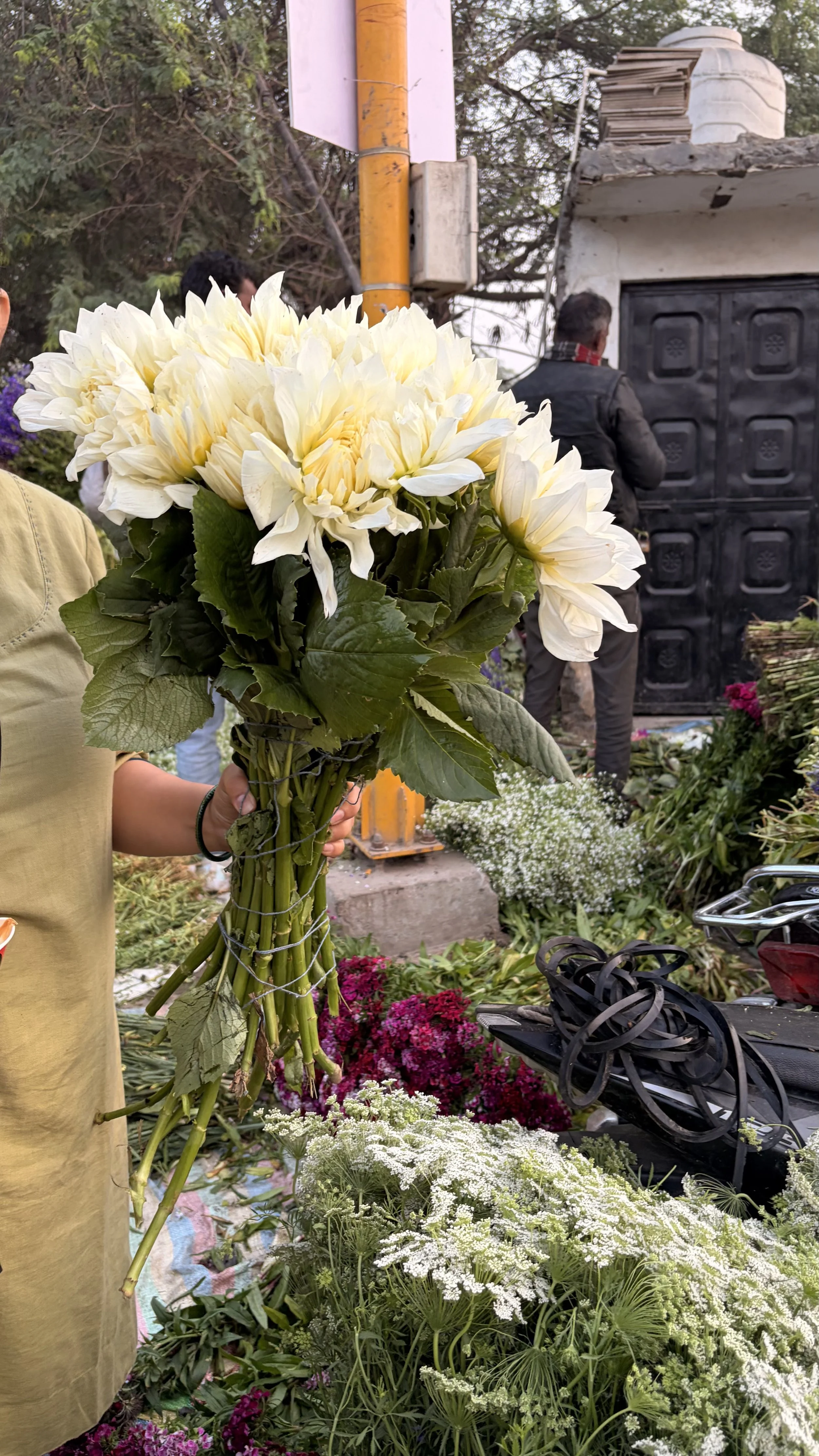
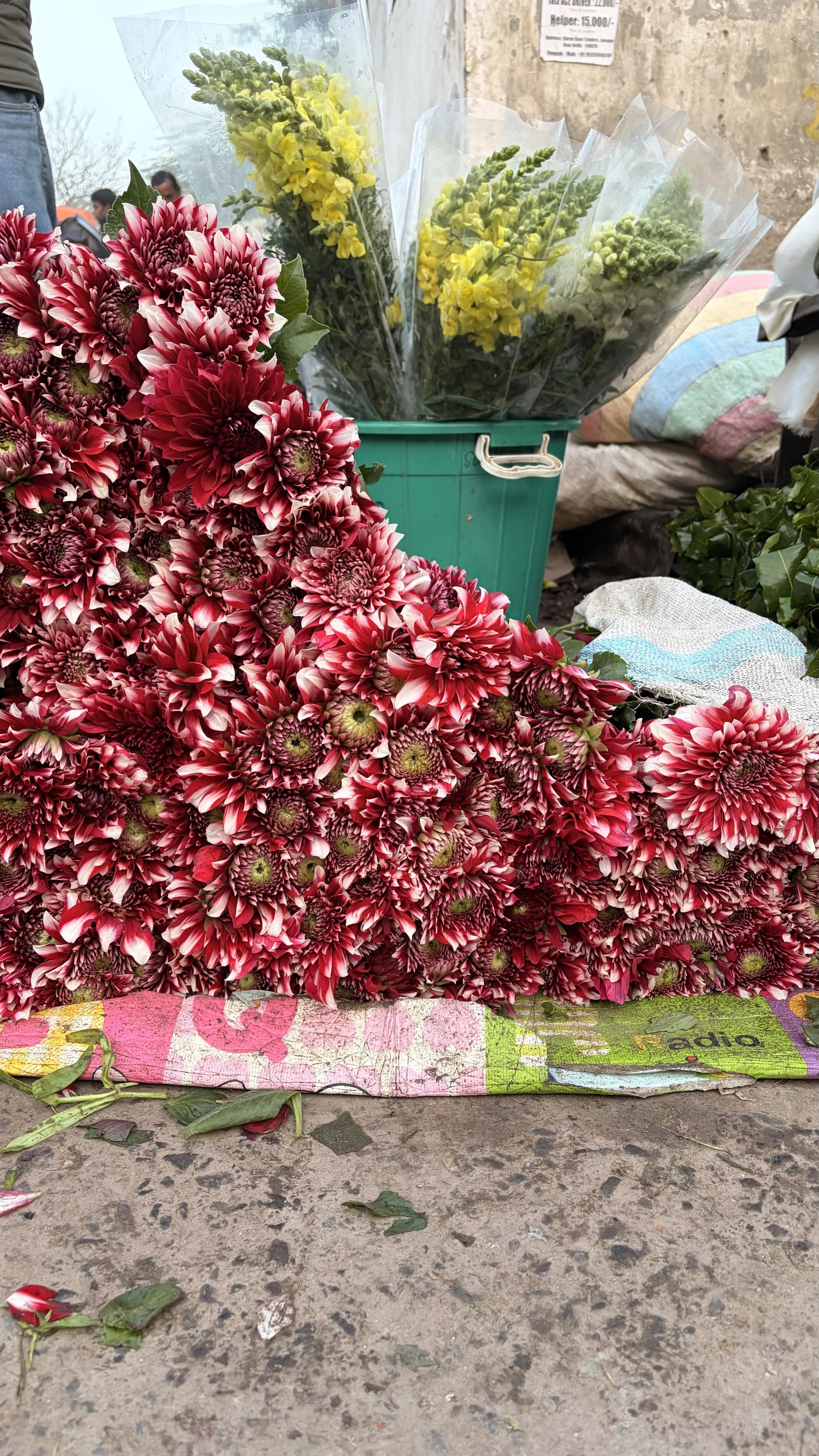
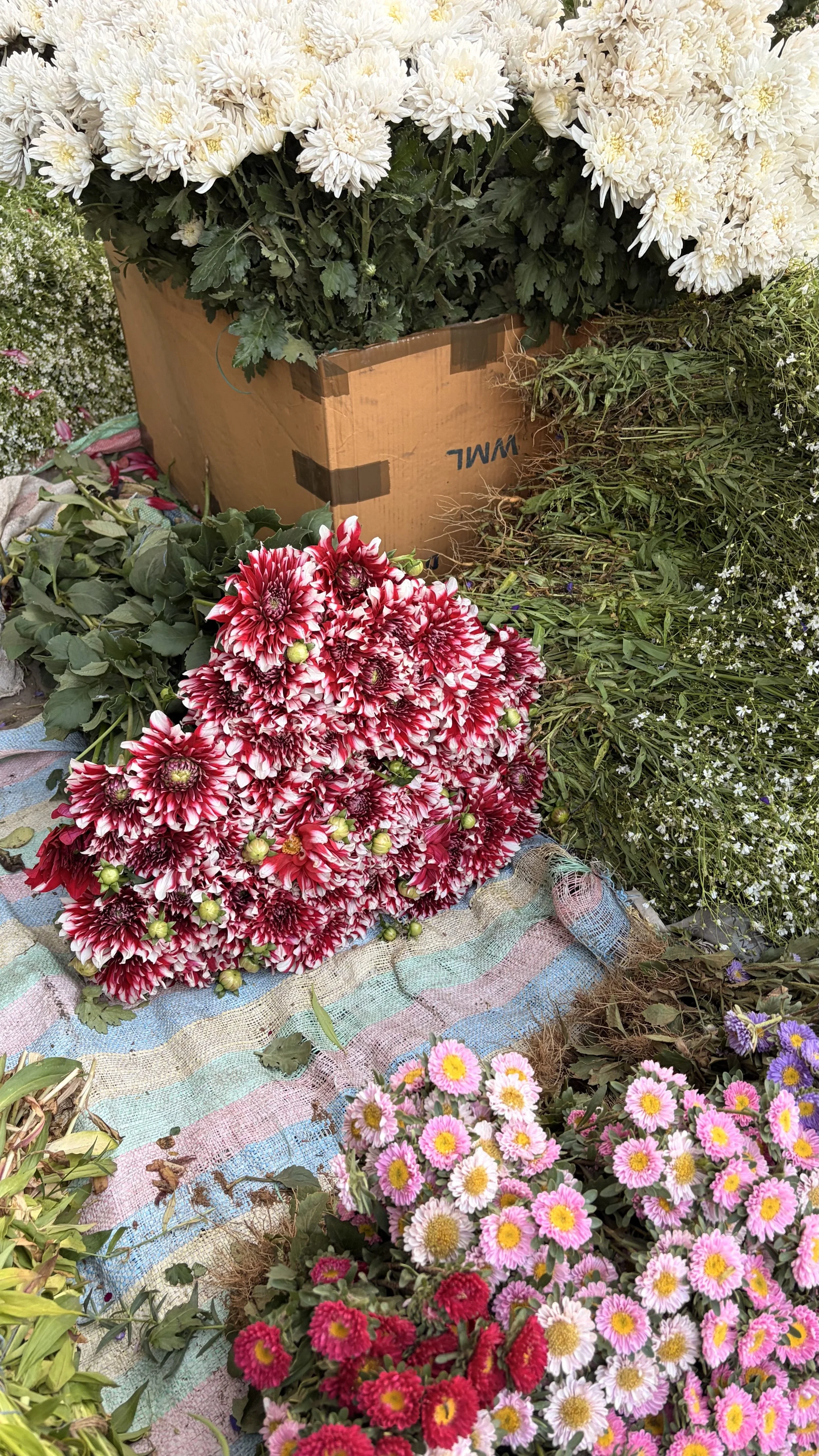
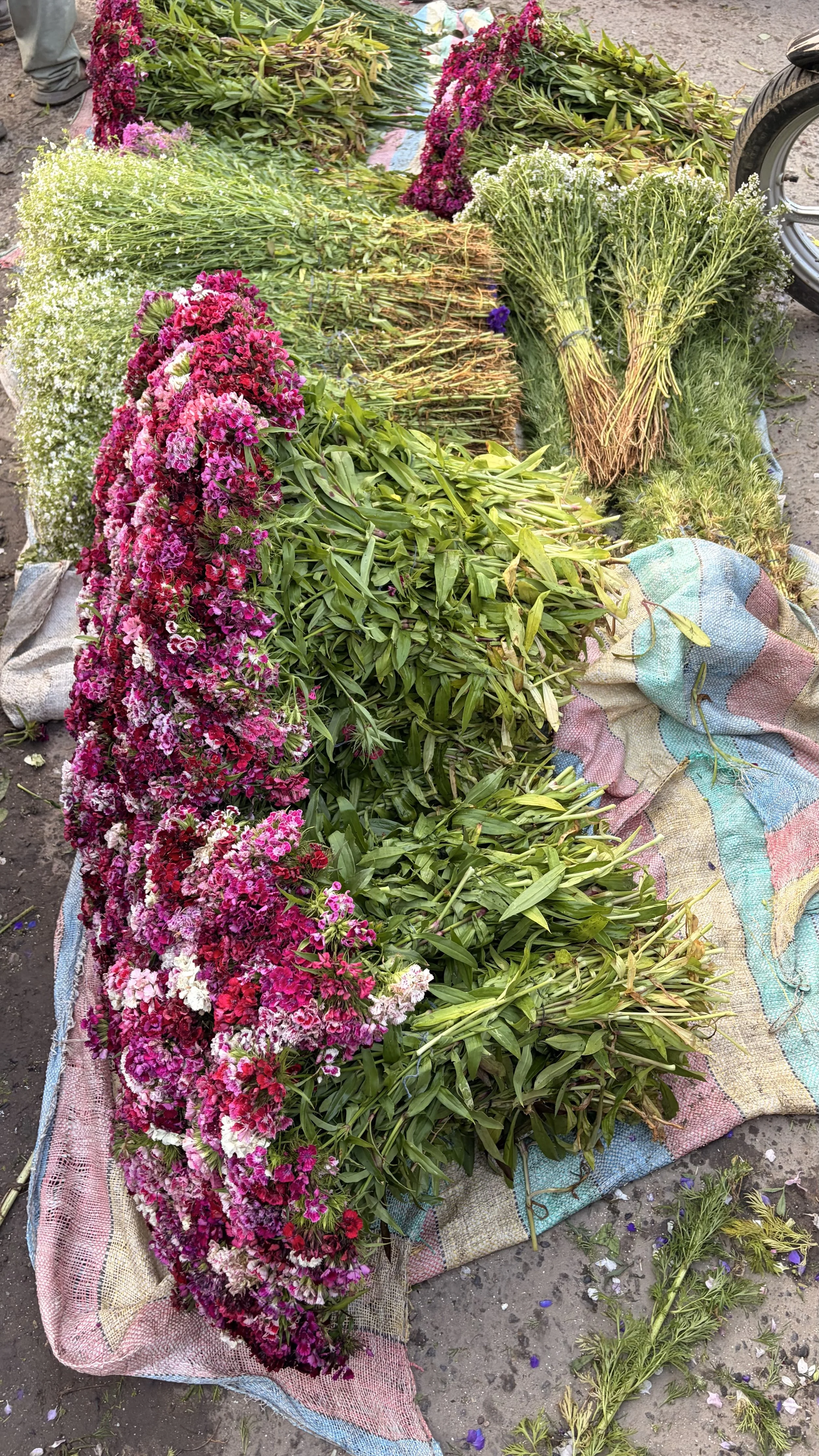
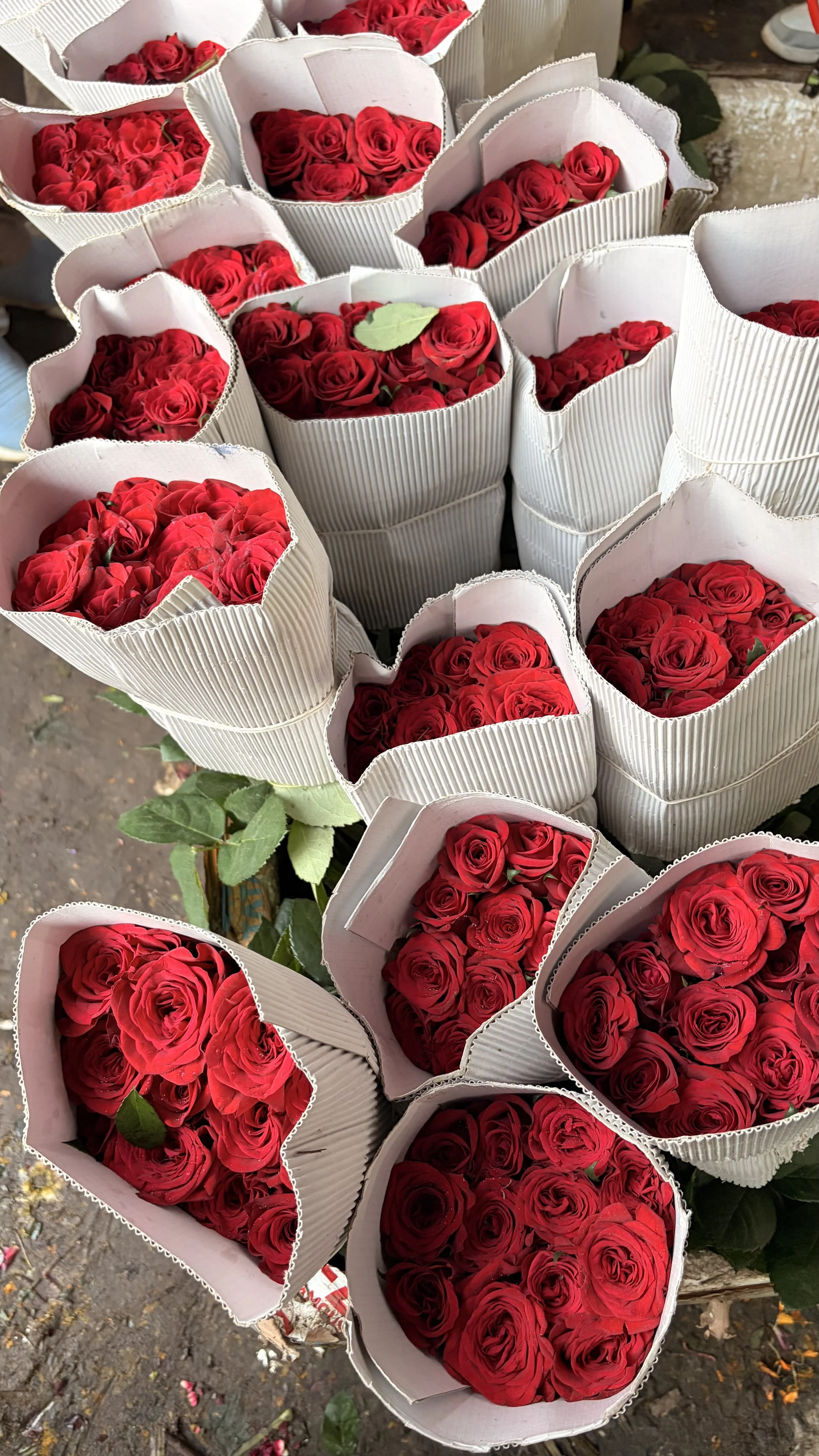
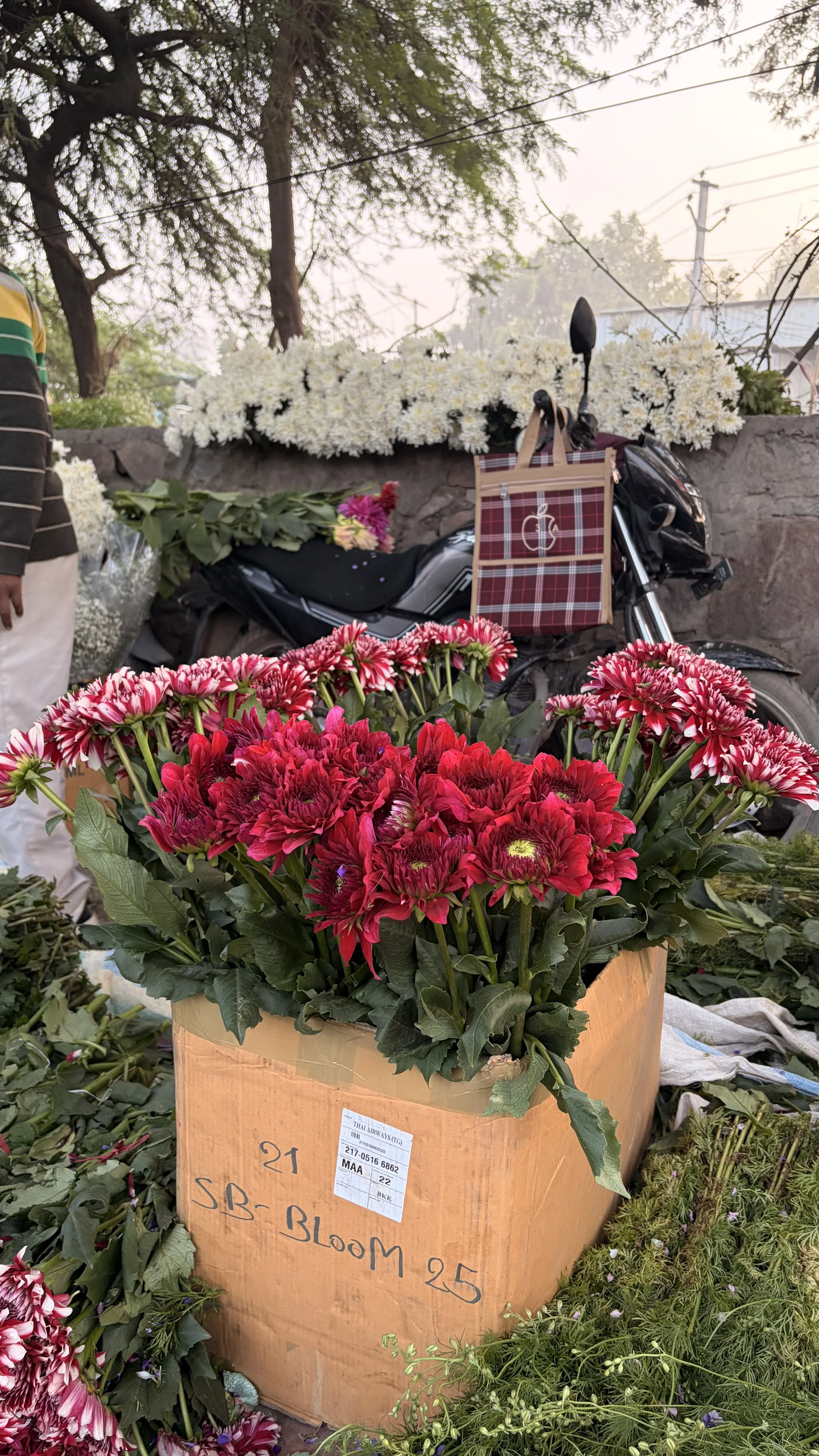
The flowers themselves are abundant and varied, reflecting the season. Marigolds dominate in orange and yellow, threaded into thick garlands. Roses appear as tight buds, loose petals, or carefully plucked offerings. Lotus flowers sit sculptural and broad. Lilies in white and pink trumpet their scent, dahlias in deep reds, purples, and yellows form dense clusters. Jasmine and tuberose are strung delicately, filling the air with fragrance. Chrysanthemums, carnations, and various ornamental greens complete the vibrant palette.
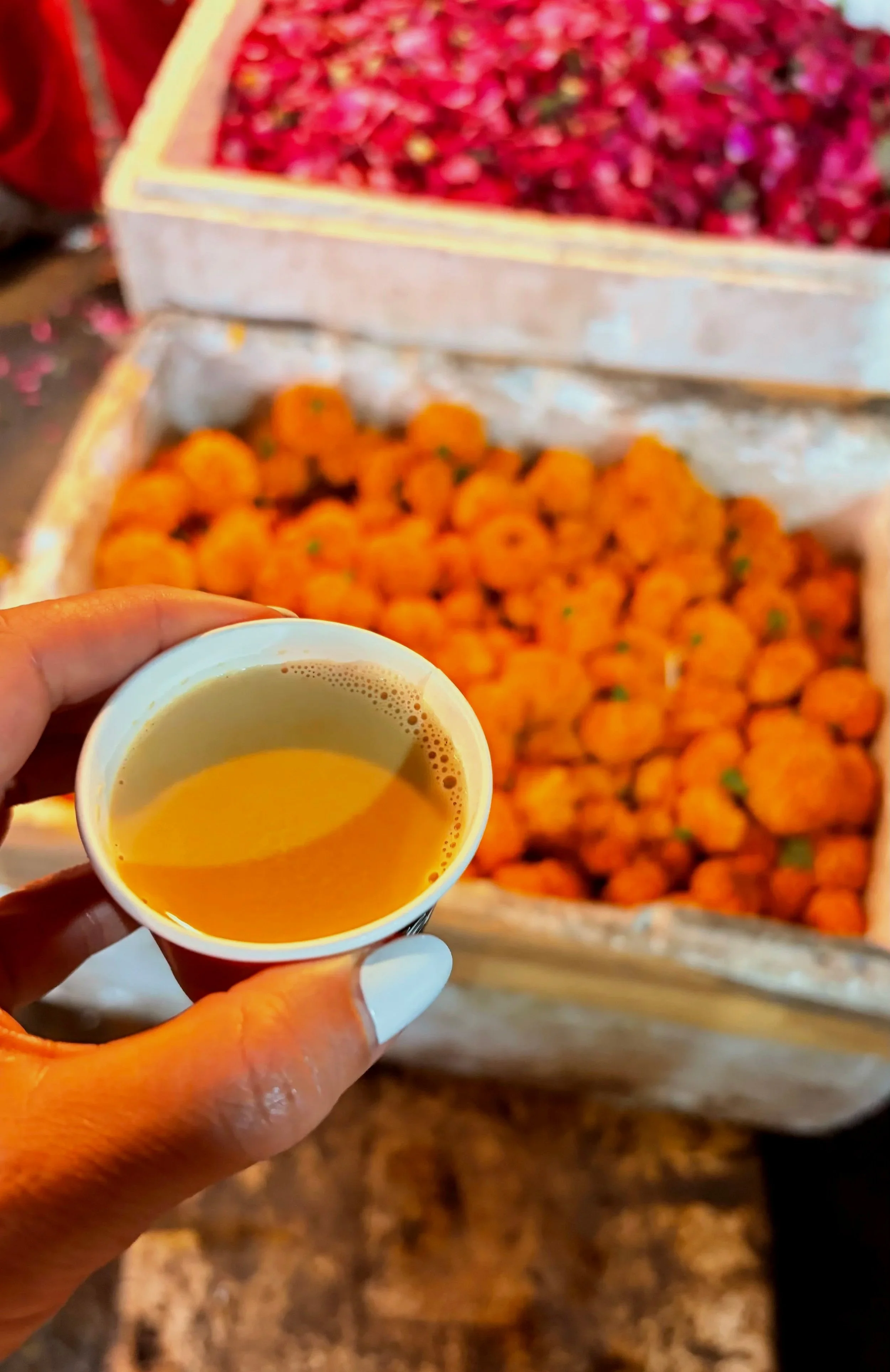
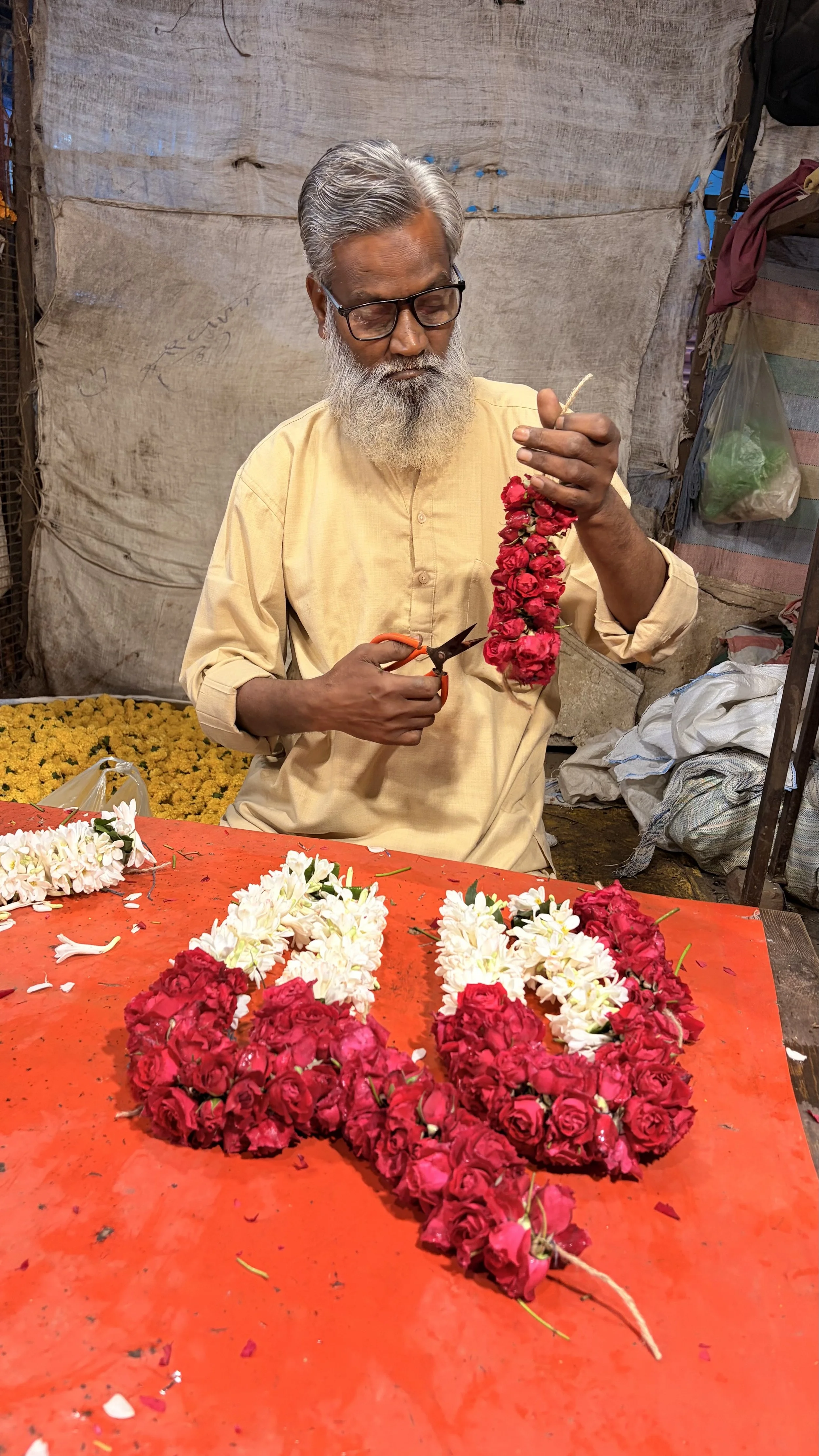
Amid this density, small chai stalls appear, preparing tea to individual taste—more sugar, less milk, adjusted in quick exchanges. Close to the temple, garlands for the gods are threaded on the spot, while fresh rose petals are plucked by hand and collected in shallow containers. Ice cubes are scattered over blooms to keep them cool and vibrant. Garlands hang in thick clusters, while the rest lies in heaps or shallow baskets, constantly replenished, mixed, and rearranged. Tuk-tuks and motorbikes pass through the crowd, flower sellers weaving between them, carrying fresh loads balanced in their arms.
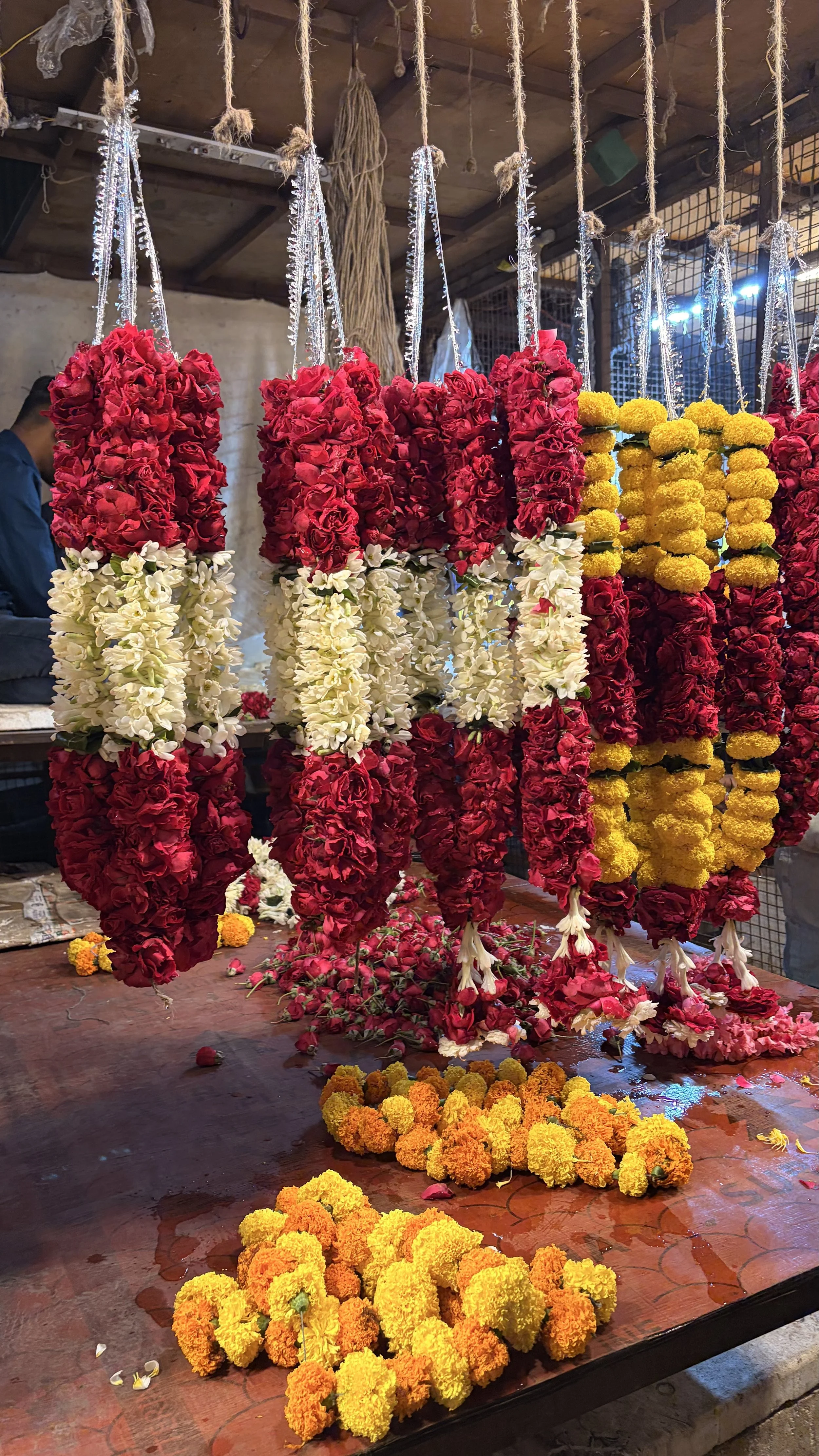
At any moment, something unexpected enters the scene. A cow might suddenly appear, pushing through the market. I watched one pull freshly stacked green twigs into its mouth, chewing steadily until it was hurried away. The atmosphere is hectic, intensely colorful, and largely male-dominated. It requires patience and a certain resilience to move through it, yet it remains strikingly picturesque. The flowers themselves are carefully arranged—rarely in vases, sometimes in buckets, but more often stacked or hung, like produce in a vegetable market. Sorted by type, yet forming an overall sense of dense, vibrant disorder.
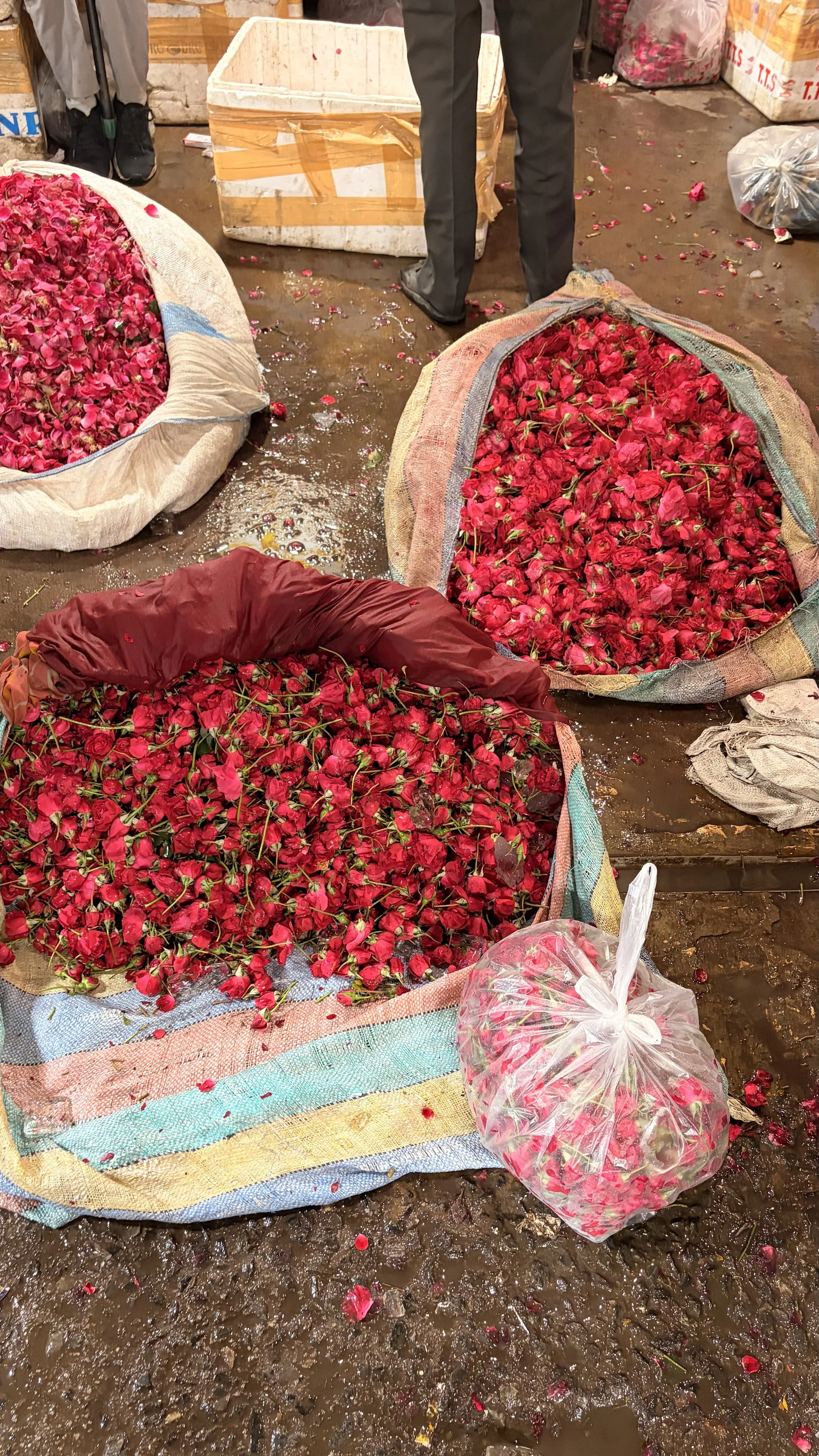
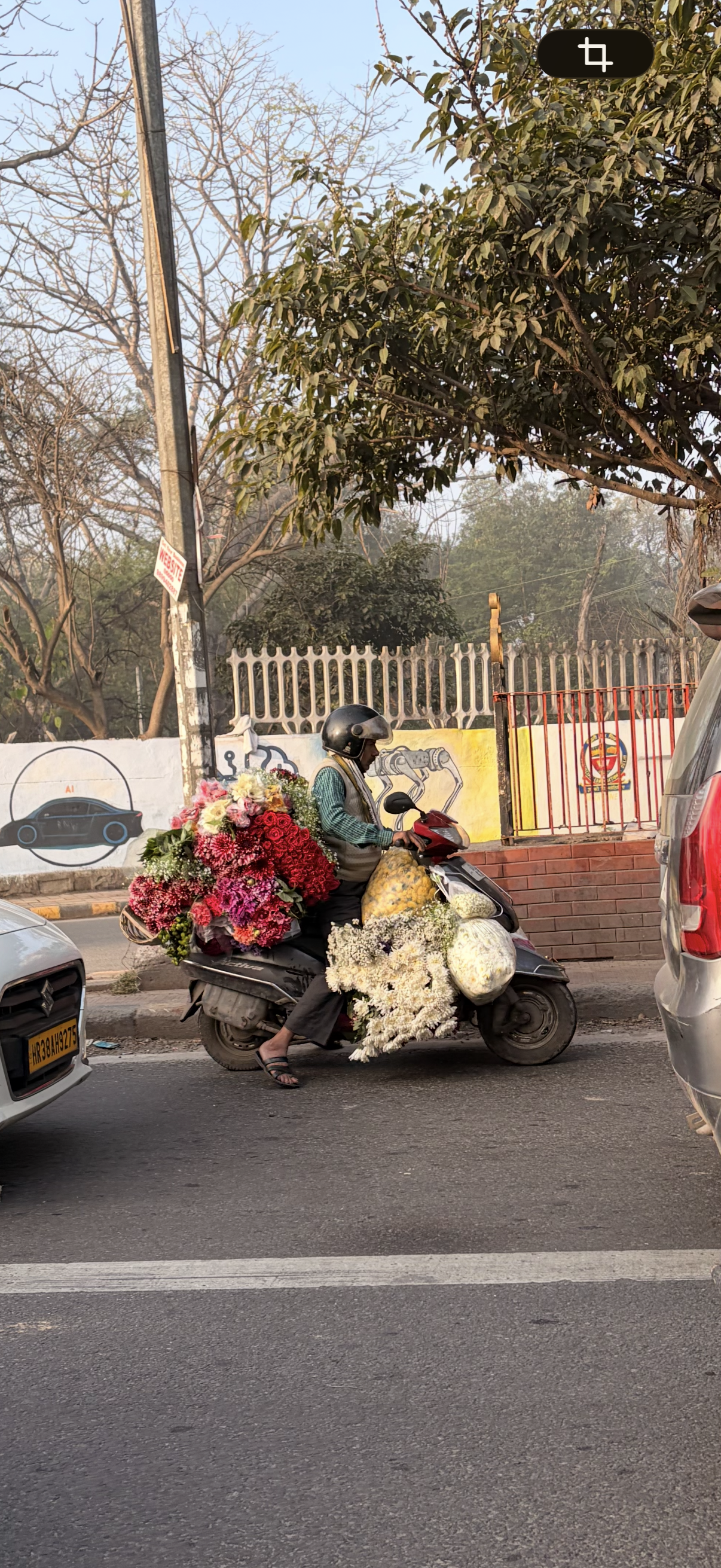
Transport of flowers is another spectacle entirely. Motorbikes are overloaded—flowers stacked in front and behind the rider, so packed that they must stretch their legs straight out to drive, unable to bend them. Tuk-tuks are crammed full, trunks and even car interiors packed with blooms, a chaotic ballet of movement through the narrow paths. Flower sellers weave expertly through the crowd, balancing armfuls while dodging vehicles and pedestrians alike.
Go visit the flower market, there is no need for cash, payment is digital like everywhere in India. Bring some nerves - you will enjoy it!