Tracing Atmospheric Force: How Objects Shape Lifestyle and Perception
This essay examines how atmosphere shapes lifestyle through design objects, focusing on the USM x Rimowa collaboration. It explores how material form carries aesthetic force and influences the way we inhabit space.
1. Atmosphere as Lifestyle Force
Since beginning this journal of atmospheric aesthetics and visual thought, I have become increasingly aware of how profoundly the subtle currents of atmosphere shape the way I exist in the world. My writing emerges from a deliberate decision to resist translating perception into argument or compressing what I sense into forms easily digestible by others. Instead, I allow attention itself to unfold, attending fully to what appears, how it appears, and the resonances it awakens within me. In doing so, I find myself at the threshold of a renewed creative trajectory.
For me, atmospheric force is inseparable from the impulses that inform lifestyle. It is not the objects alone that convey this impulse, but the subtle field in which my taste, intuition, and desire are continually shaped and reshaped. Objects such as a meticulously crafted Rimowa suitcase or a USM Haller modular system do more than perform practical functions. They embody multiple strands of lifestyle, combining aesthetic and functional currents into singular, amplified expressions. In doing so, the objects themselves become vessels of atmosphere, translating invisible sensibilities into material, form, and use, while carrying memories, aspirations, dreams, and the lived experience of style.
2. The USM x Rimowa Collaboration
What interests me most about the USM by Rimowa collaboration is that nothing fundamentally new was invented. Both USM and Rimowa have spent decades refining a single object: Rimowa the grooved aluminium suitcase since 1955, and USM the Haller modular system since 1965. Over time, these objects have moved beyond mere function. They have become carriers of a distinct design atmosphere, forms that accompany life and quietly shape how it is lived.
The resulting piece brings these two atmospheric lineages into direct contact. The familiar USM Haller structure remains fully intact, yet its surface is re-formed in Rimowa’s grooved aluminium. A storage unit begins to evoke the presence of luggage. Furniture takes on the suggestion of movement. Permanence and mobility converge in one body.
I find the piece exceptionally beautiful in its clarity. Its clean lines retain the calm precision that defines USM, while the aluminium introduces a rhythm of light and reflection long associated with Rimowa. Its functionality remains uncompromised, and it is precisely this uncompromising function that intensifies its aesthetic presence.
What emerges is not simply a collaboration, but an intensification. Two objects that already carry strong atmospheric identities are combined, amplifying each other. The result makes visible how atmospheric force can accumulate in form, and how lifestyle, in the end, is shaped through these objects that gather and project the way we want to live.
Through this lens, the way I inhabit space, interact with these objects, and move among them is inseparable from the atmospheric charge they contain. The currents of influence are both personal and cultural, functional and aesthetic, converging in forms that double their expressive force and intensify the interplay between perception, object, and environment.
I will return to these ideas later to explore them in greater depth, tracing the intersections of taste and the ways in which the objects we live with both shape and are shaped by the sensibilities we carry.
Ultimately, atmospheric force traces directly back to lifestyle, connecting perception, object, and experience. As I always say: '‘Before Style, there is Atmosphere’.
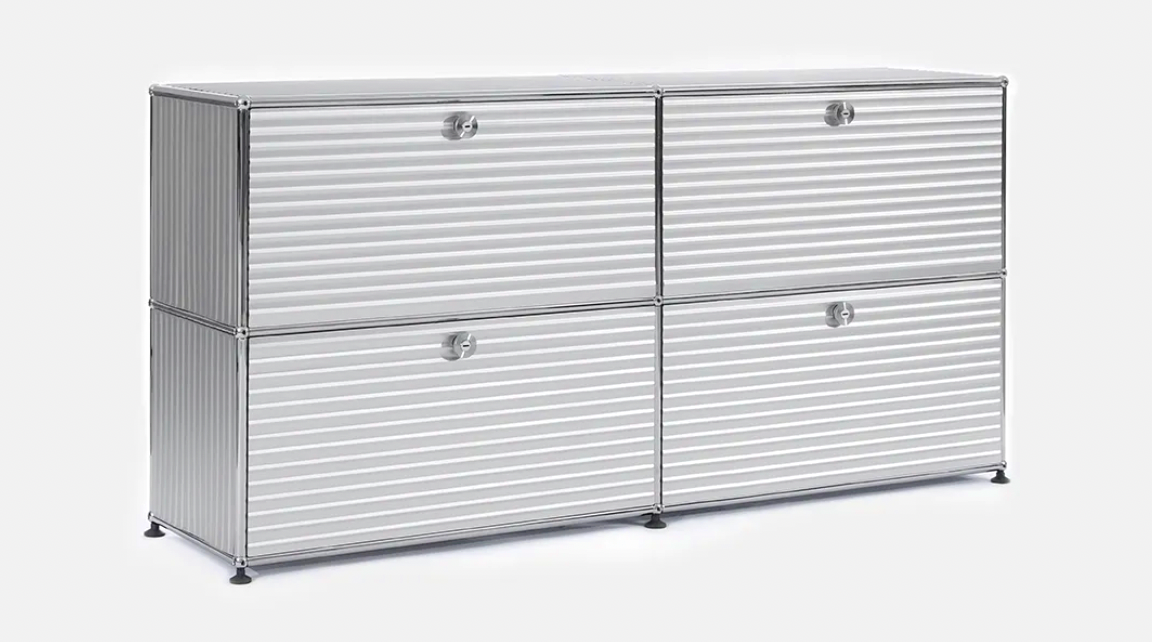
USM Haller X Rimowa 2022. An all-aluminum overhaul of USM’s iconic Haller system. Limited Edition.