A House Shaped by Time
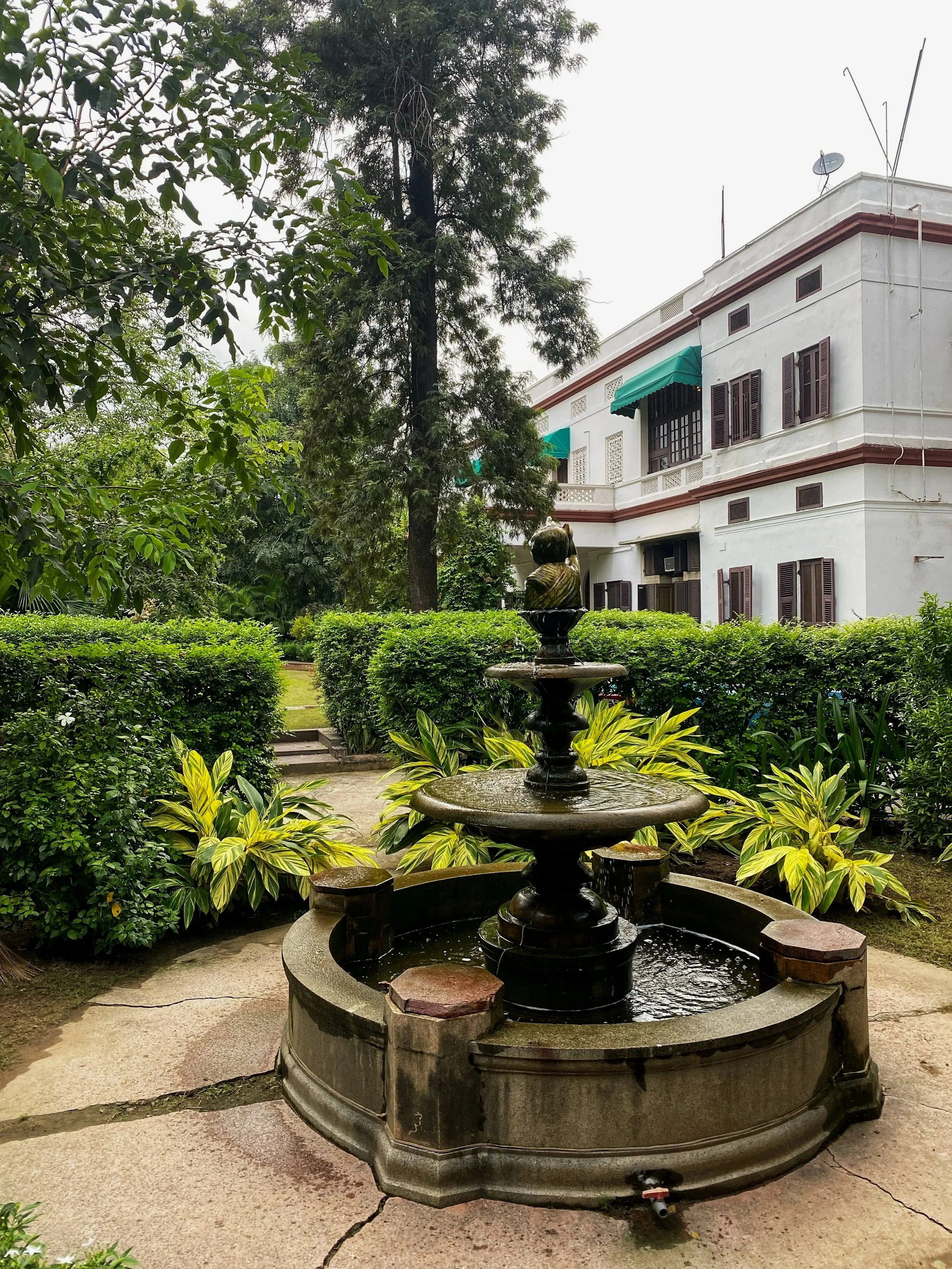
Stepping into our house, just a stone’s throw from India Gate, the dialogue with Delhi’s past becomes apparent — an atmosphere shaped by the city’s early twentieth-century architectural moment. The house is the work of Walter Sykes George (1881–1962), a British architect active in New Delhi at a time when the city was being developed as the imperial capital of British India, under the broader planning vision led by Sir Edwin Lutyens.
Indo-Classical Design Principles
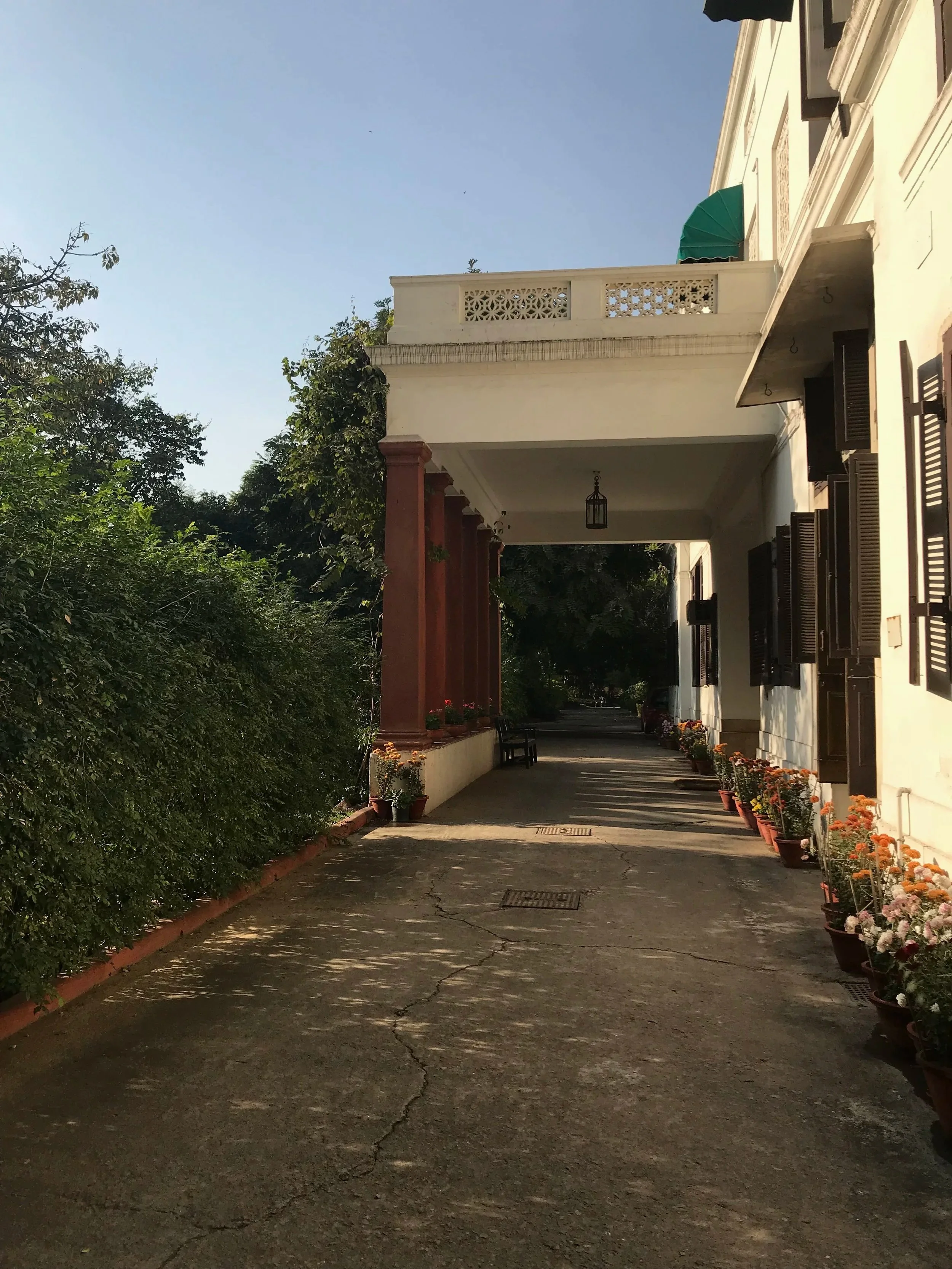
Within this context, George worked in an Indo-Classical architectural style, rooted in imperial classicism and informed by Mughal and Indo-Islamic principles of scale, shade, and spatial proportion. These ideas are evident throughout the house, expressed through climate-conscious planning, carefully framed views, and the considered relationship between interior and exterior spaces. Dalmia house is part of the architectural landscape of its time, echoing the design principles that defined New Delhi’s early development.
Built towards the second quarter of the century (construction started in the 1920s) for Raja Charanjit Singh, kinsman of the Kapurthala Maharaja Jagatjit Singh, the building has witnessed the city’s transformation while remaining set apart from its intensity. Beyond the gates, Delhi moves at full pace; within the grounds, the tempo shifts.
Spatial Organization and Interior Experience
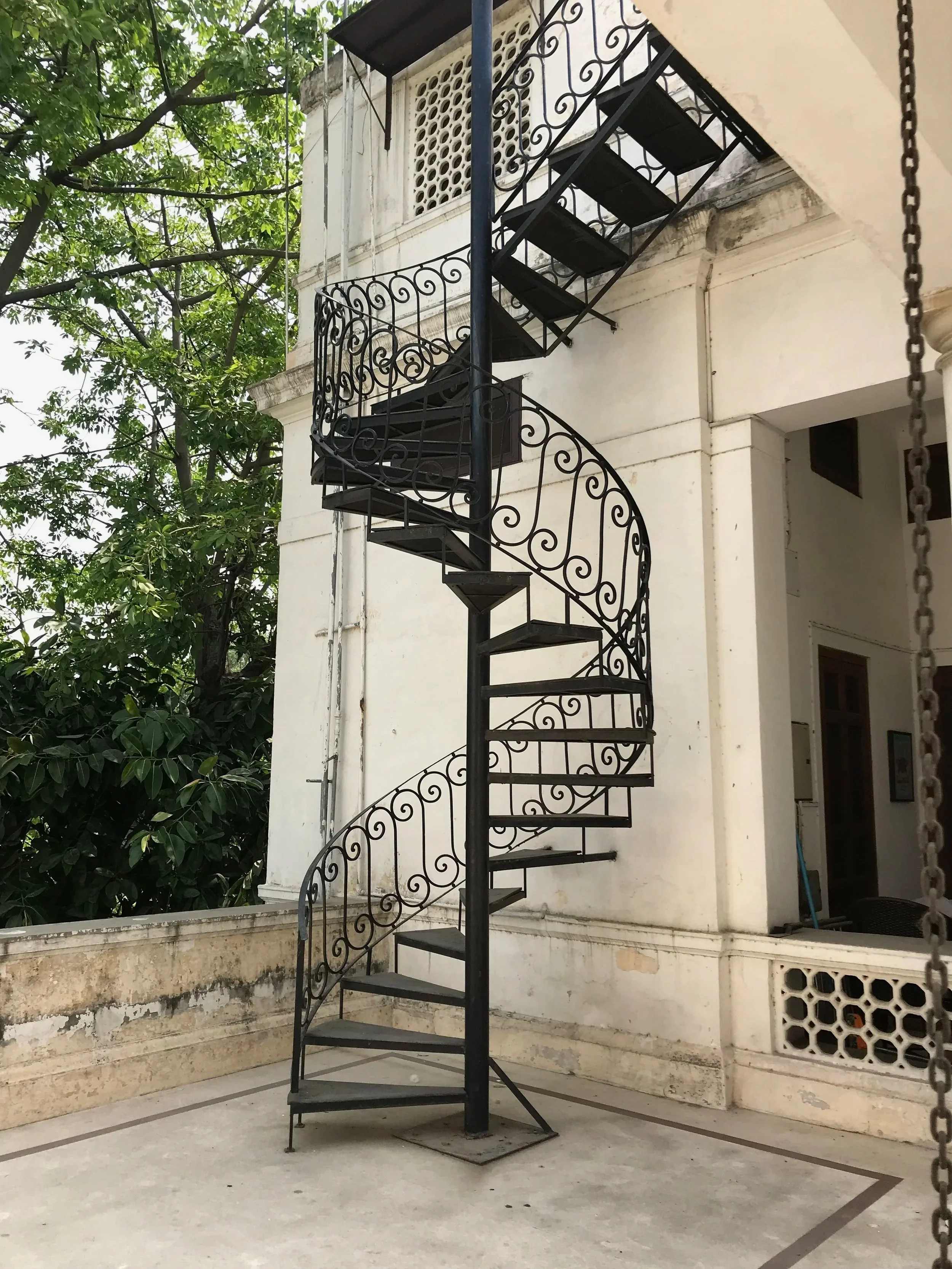
The house is organized along a strong longitudinal axis, its proportions calibrated to create balance and visual continuity throughout. At its core, a prominent central staircase anchors the interior, connecting the ground and upper floors and acting as the house’s vertical spine. From the upper level, three open terraces extend outward: one positioned directly above the main porch, overlooking the front garden, and two others set above the lateral wings, each offering a distinct relationship to the surrounding grounds.
Inside, the house opens into airy rooms bathed in natural light, with high ceilings that draw the eye upward. Fans hum above patterned marble and stone floors, their coolness a welcome relief in the Delhi heat. Rooms flow naturally into one another, their boundaries softened by wide doorways and framed views of the gardens, while the ascent reveals shifting perspectives across the terraces and surrounding landscape.
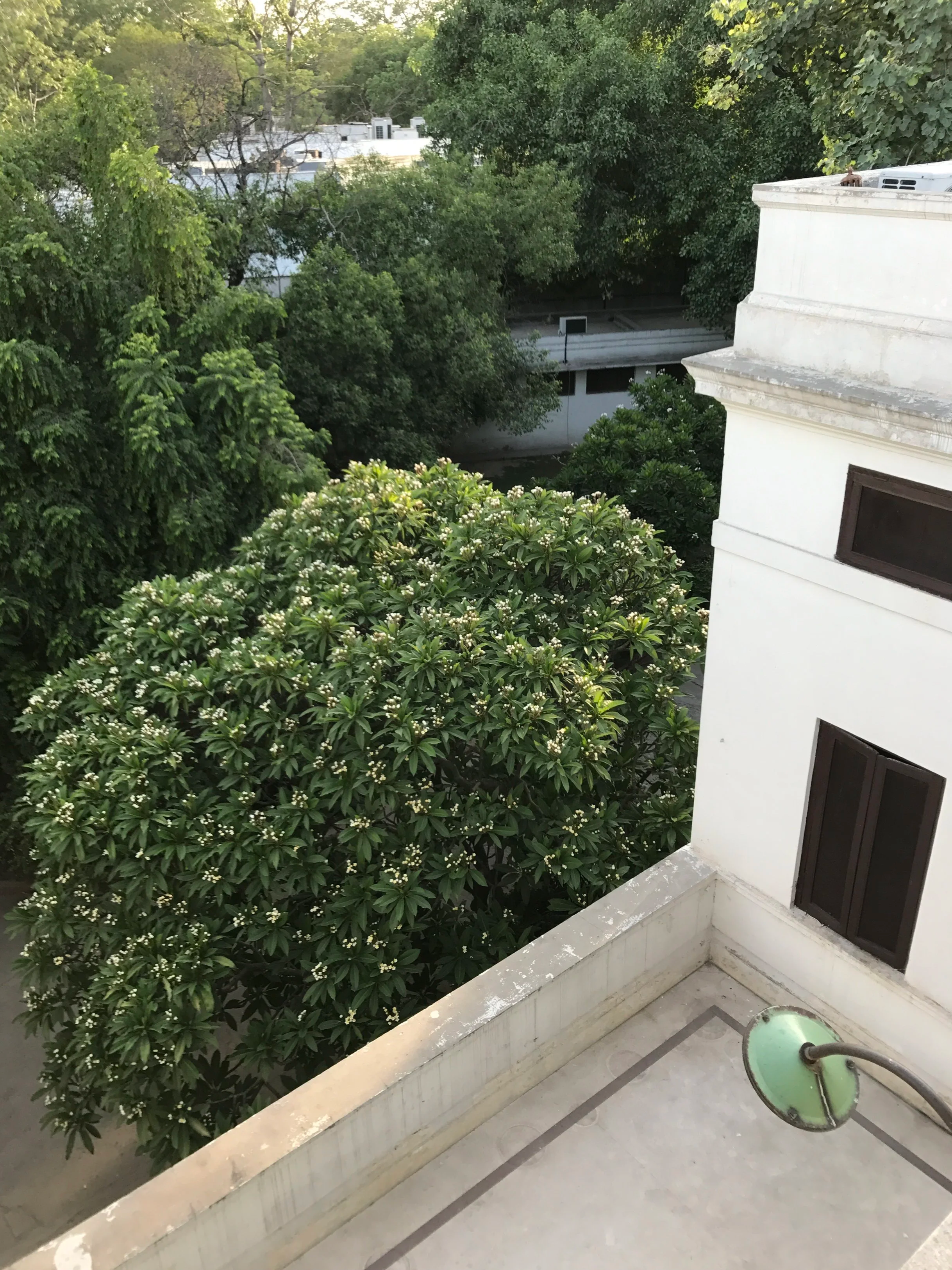
Upstairs Terrace, Dalmia House, New Delhi
Light, Life, and the Garden
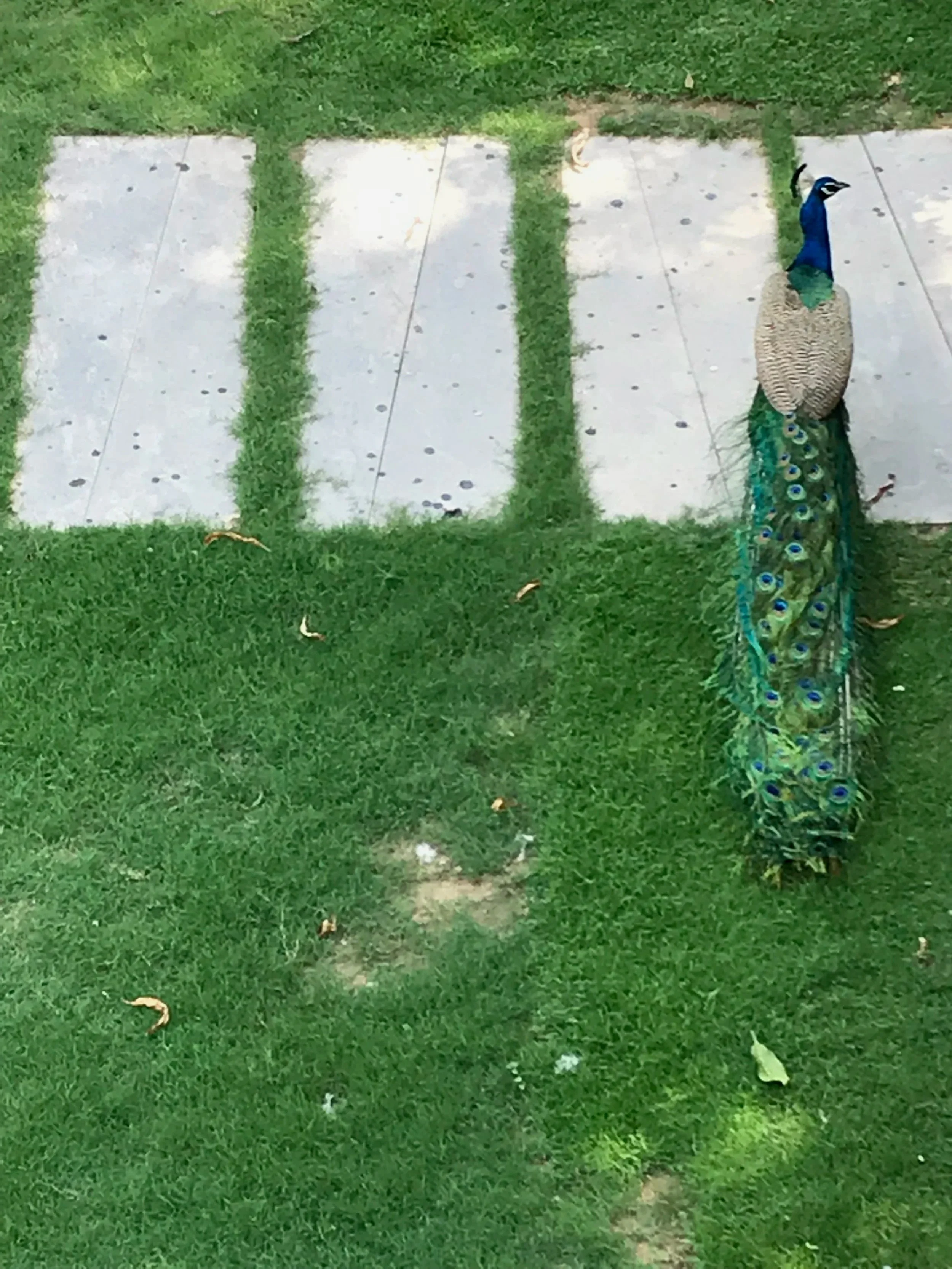
Sunlight moves through the day, tracing patterns across walls and floors, while breezes carry the scent of Champa flowers into the house. Beyond its walls, the garden hums with life. Trees are in full bloom, peacocks strut across the grounds, and monkeys occasionally clamber up the façade, peering into windows in search of something to steal. Overhead, red-beaked parrots call out as palm squirrels spring through the trees.
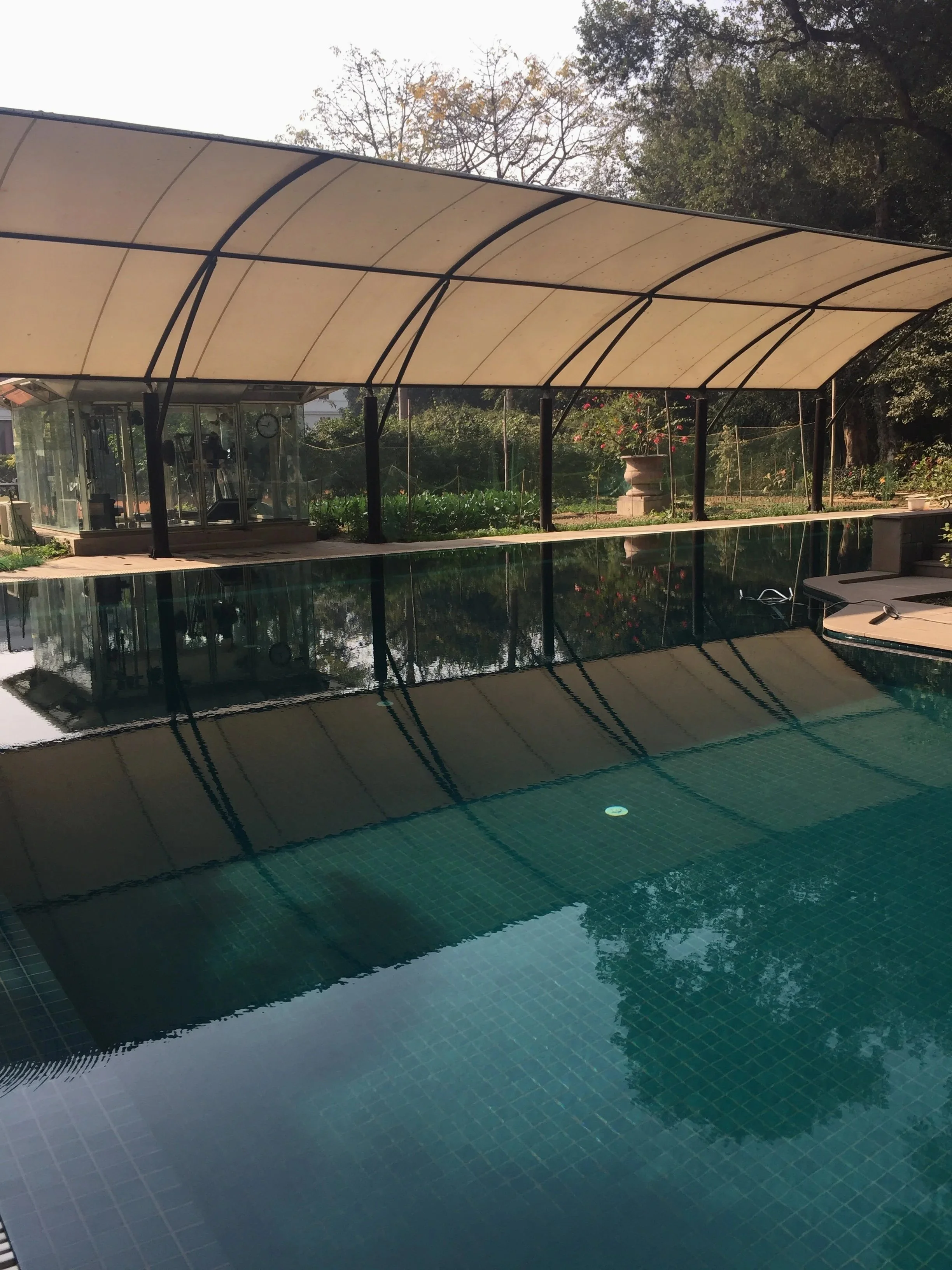
High above, cheels wheel gracefully, a few at first, then more joining their silent, swirling choreography. In the back garden, banana trees stretch their leafy branches, while near the swimming pool you might catch a peacock pausing mid-step, utterly at ease in this secluded sanctuary.
Here, the cadence of the city recedes. As dusk settles in, birds begin to flit across the grounds, searching for places to rest. Some might call it a bubble. I simply call it: Home.
Biographical details and architectural context drawn from British architectural archives, published histories of Delhi architecture, and records of Walter Sykes George’s work.